Snap Inc.2017
Lens Studio IDE
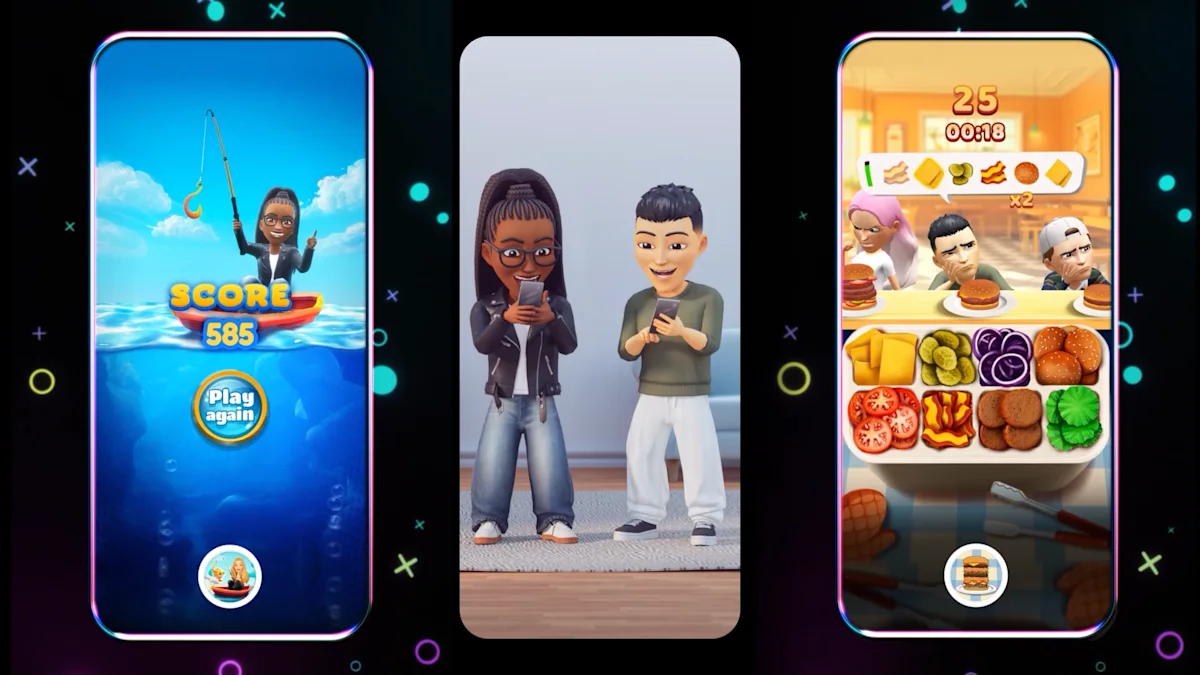
Desktop, iOS, and web AR authoring studio featuring visual scripting, Ray Tracing, Neural Rendering, Asset Compression, Animation Curve Editor, GenAI Suite, and AI Assistant code generation.
AR developer toolchain spanning Lens Studio Desktop/iOS/Web IDE, GenAI Suite & AI Assistant, Camera Kit SDK, SnapML, Lens Cloud, and Snap Cloud.
Snap Inc.2017
Desktop, iOS, and web AR authoring studio featuring visual scripting, Ray Tracing, Neural Rendering, Asset Compression, Animation Curve Editor, GenAI Suite, and AI Assistant code generation.
Snap Inc.2020
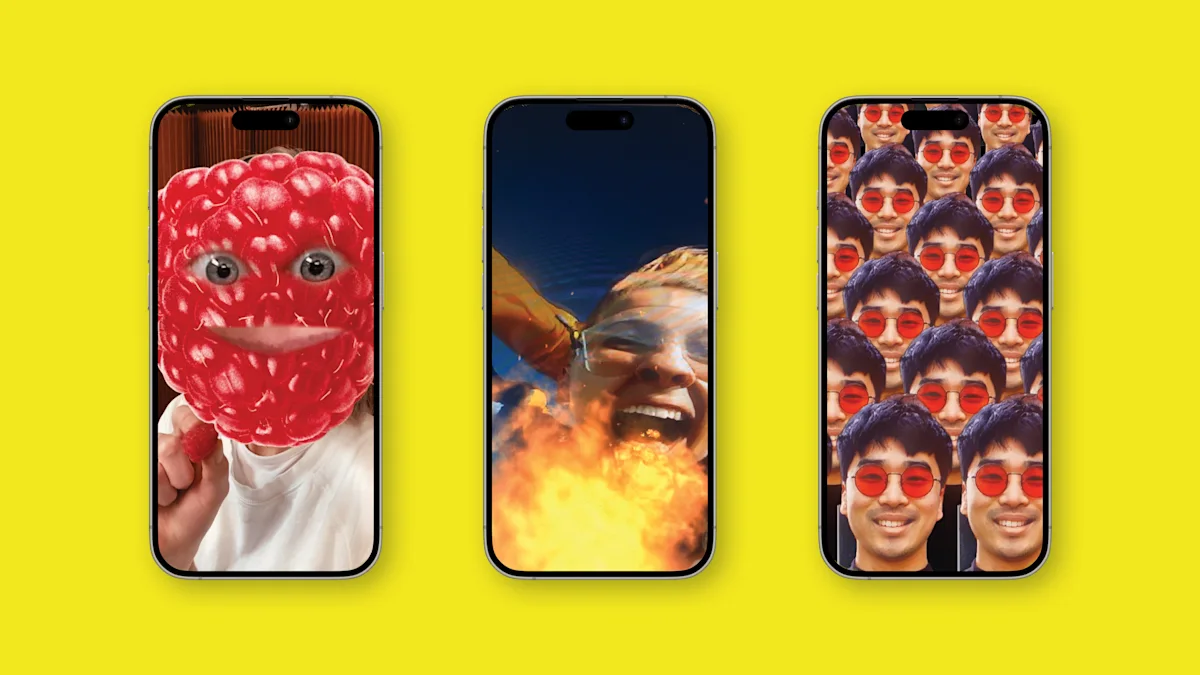
Cross-app AR SDK embedding Snapchat's camera & Lens engine into third-party mobile apps, native smartphone cameras, and live venue screens, plus SnapML custom on-device ML runtime.
Snap Inc.2022
Cloud backend-as-a-service layer for AR Lenses providing persistent multi-user state, remote 3D asset streaming, location storage, and edge functions.
Click any person to see their role, tenure, features, and connections.
Product ManagerSnap 2017–2025
Product ManagerSnap 2018–2022
Product ManagerSnap 2019–2022
Product ManagerSnap 2018–2021
Product ManagerSnap 2018–2023
Product ManagerSnap 2020–2022
Product ManagerSnap 2023–2024
Product ManagerSnap 2017–2024
Product ManagerSnap 2020–2025
Product ManagerSnap 2018–2022
Product ManagerSnap 2019–2024
Product ManagerSnap 2023–2024
Product ManagerSnap 2017–2026
Product ManagerSnap 2018–2025
Product ManagerSnap 2023–2025
Product ManagerSnap 2023–2025
Click any person to see their collaborator network, or jump to related features built by the same team.
Inside This Pillar (3)
Built by the Same People
136 builders · 280 patents
225 builders · 428 patents
90 builders · 204 patents
89 builders · 55 patents
283 builders · 835 patents
Click anyone below to see who they worked with on Lens Studio & AR Developer Platform, or open their profile to explore their full collaborator network.
Research Scientist · 33 patents on this feature
Co-Invented Here With (1)
| Builder A | Builder B | Shared Patents |
|---|---|---|
| Celia Nicole Mourkogiannis | Jean Luo | 88 |
| Menglei Chai | Sergey Tulyakov | 46 |
| Celia Nicole Mourkogiannis | Ebony James Charlton | 36 |
| Kyle Olszewski | Sergey Tulyakov | 30 |
| Elad Haviv | Reuven Bakalash | 26 |
| Menglei Chai | Kyle Olszewski | 24 |
Product milestones paired with year-by-year R&D patent waves and the specific capabilities laddering into this feature. Click any milestone, year bar, or capability pill to drill into its patents and builders.
Click any year bar to inspect its filings and builders inline. Highlighted bar marks public launch year; muted bars reflect pre-launch R&D.
“Since we launched Lens Studio in late 2017, it expanded into SnapML, Camera Kit SDK, Lens Cloud, Ray Tracing, Lens Studio 5.0 GenAI Suite, iOS/Web authoring, AI Assistant, and Snap Cloud (Supabase).”Source Filing
3D MODEL GENERATION USING MULTIPLE TEXTURES
The tool creates a 3D object from images showing different views, lets an author correct their alignment, and merges them into one texture for the finished model.
FACIAL SYNTHESIS IN AUGMENTED REALITY CONTENT FOR THIRD PARTY APPLICATIONS
Lets an external app capture a user's image and generate animated media using movements extracted from a source video, then display the result in its AR experience.
GENERATING TEXT-TO-MOTION ANIMATIONS FROM PARTIALLY ANNOTATED DATASETS
Generates coordinated body, hand, and facial animation from text descriptions. It learns from incompletely labeled motion datasets so creators can produce expressive character movement without manually animating every part.
SYSTEM AND METHOD FOR AUGMENTED REALITY BROADCAST INTEGRATION
Live broadcast frames are converted into a format that an AR SDK can process, enhanced with effects, and converted back. The system also reconciles frame-rate differences so the enhanced feed can be broadcast or displayed.
INCREMENTAL SCANNING FOR CUSTOM LANDMARKERS
Creators can improve an existing scan of a location by capturing additional views. The system merges useful new views into the location map so AR effects can recognize and align with the site.
AUTODECODING LATENT 3D DIFFUSION MODELS
Learns from ordinary images or videos to generate three-dimensional objects and articulated figures. The resulting assets maintain consistent shape and appearance when rendered from different viewpoints.
SOFTWARE DEVELOPMENT KIT FOR IMAGE PROCESSING
Other mobile apps can call an SDK to apply Snapchat-style AR effects to their live camera feeds. The effects respond to application commands, user input, and device sensor data.
REAL-TIME NEURAL LIGHT FIELD ON MOBILE DEVICES
Renders learned 3D scenes on a phone with low latency and a compact neural network. It combines lower-resolution processing with image upscaling to produce detailed views without excessive computation.
MOBILE DIGITAL EFFECT CREATION AND PUBLICATION PLATFORM
Provides a phone-based interface for creating visual effects and publishing them for others to use. The available metadata suggests touchscreen editing and image compositing, although no abstract is supplied.
AUTOMATED CREATION OF AUGMENTED REALITY EXPERIENCE USING MULTI-AGENT LANGUAGE MODELS
The title indicates that multiple language-model agents collaborate to create an AR experience automatically. This most closely fits AI-assisted Lens creation rather than an effect applied directly to a user's Snap.
THREE-DIMENSIONAL OBJECT RECONSTRUCTION
The system reconstructs an object in a photograph by estimating 3D shapes around recognizable landmarks and combining them into one model. This can turn flat images into assets for AR experiences.
AUTOMATED CREATION OF AUGMENTED REALITY EXPERIENCES USING MULTI-AGENT LANGUAGE MODELS
AI agents act as a creator, engineer, and designer to turn a user's description into an AR experience. They reuse components, generate assets, and assemble an executable application that the user can refine conversationally.
DYNAMIC AUGMENTED REALITY CONTENT DELIVERY PLATFORM
Lets users create AR content on a phone by choosing a theme and template and supplying their own input. The result is published with descriptive metadata so an AR application can retrieve and display it.
CONTENT CREATION PLATFORM FOR XR DEVICES
Creators can simulate how an AR device moves through a scene and responds to user interactions. The preview also estimates tracking behavior, power consumption, and heat before testing on hardware.
ANALYZING AUGMENTED REALITY CONTENT USAGE DATA
Collects information about how people use individual Lenses and characterizes their audiences. Lens creators can review those results in a dashboard.
SYSTEM FOR NON-PLANAR SPECULAR REFLECTIONS IN HYBRID RAY TRACING
The renderer makes reflections on curved objects faster by treating their surfaces as many small flat triangles. It groups similarly directed reflected rays to reduce rendering work while preserving realistic reflections.
UNSUPERVISED VOLUMETRIC ANIMATION
The system learns an object's shape and movable parts from ordinary images or videos without manually labeled training data. It can turn a small number of images into a 3D object that creators can animate in a Lens.
RAY TRACING BETWEEN AR AND REAL OBJECTS
Uses a 3D model of an object in camera video to calculate how another object affects its appearance. This makes AR lighting, reflections, or shadows look more consistent with the real scene.
MESH AND TEXTURE GENERATION USING PROMPTS
The title describes creating a 3D object's geometry and surface appearance from prompts. This most plausibly helps Lens creators generate assets without manually modeling and texturing them.
TEXTURE GENERATION USING PROMPTS
Appears to let creators describe a desired texture in words and generate a surface appearance for a digital asset. With no abstract supplied, the precise workflow remains uncertain.
USE CASE ADAPTATION OF AN AI ASSISTANT WITH PROMPT ENGINEERING
Determines what kind of help a user needs and adds relevant background information to the AI request. The assistant then returns an answer grounded in that context.
OBJECT-CENTRIC NEURAL DECOMPOSITION FOR IMAGE RE-RENDERING
The system builds a 3D object from ordinary photographs and separates its shape, materials, and lighting. This lets creators render the object from new viewpoints or under different lighting.
NEURAL SHADING OF REFLECTIVE SURFACES
The system first renders a rough image of a reflective 3D object, then uses a neural network to improve its appearance for the selected viewpoint. This supports realistic reflective assets in AR experiences.
TEXT-TO-ANIMATION GENERATION
The filing appears to generate animation from a written description, allowing creators to describe a movement rather than animate it manually. The supplied signals favor an AR creation tool rather than a conversational chatbot.
REMOTE DISTRIBUTION OF NEURAL NETWORKS
Converts a neural network into a version suited to a particular device and delivers it remotely. This allows camera effects to use compatible models across different operating environments.