2014
Geofilters & On-Demand Geofilters
Swipeable geofenced location/event overlays, Smart Data Filters (speed, temperature, altitude, time), and self-serve On-Demand Geofilters.
2020
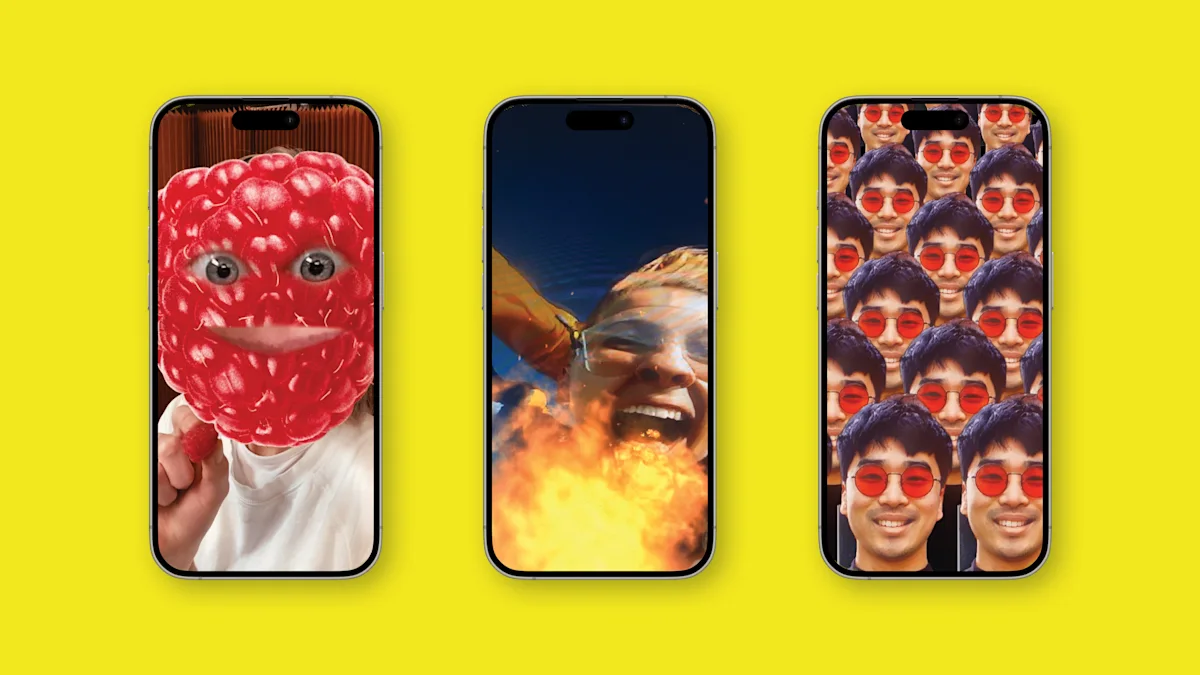
Camera Kit SDK & SnapML
Cross-app AR SDK embedding Snapchat's camera & Lens engine into third-party mobile apps, native smartphone cameras, and live venue screens, plus SnapML custom on-device ML runtime.
2021
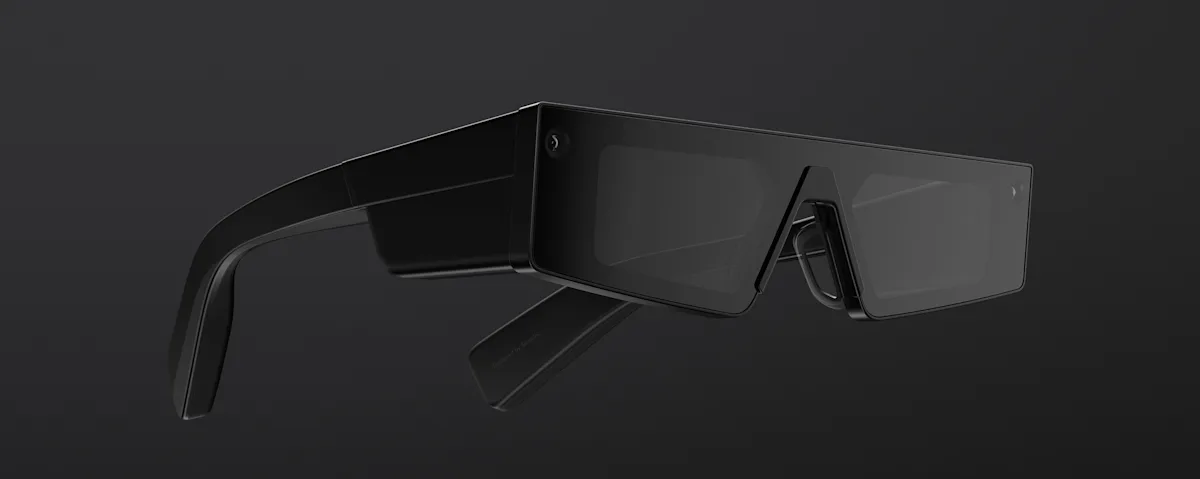
AR Spectacles & Waveguide Optics
Standalone see-through augmented reality smart glasses featuring WaveOptics diffractive waveguides, LCoS/micro-LED optical projectors, electrochromic tinting, thermal/battery design, and 6DoF SLAM cameras.

2018
Snap Camera
Virtual webcam desktop application applying Snapchat AR Lenses to Zoom, Twitch, YouTube, and video calls on macOS/Windows.
2024
Snap OS, Hand/Eye Tracking & Spatial UI
Spatial computing OS for AR glasses covering palm-menu hand gesture interaction, gaze/eye tracking, voice + neural (NextMind) input, Travel Mode motion stabilization, Sync Kit multi-user colocation, and spatial browsers/payments.
Core Platform & Infrastructure
Low-level networking, video/image codecs, compression, distributed storage, CDN routing, Android rewrite/startup performance, ML serving infra, and generic mobile OS optimizations.
Sumant Milind Hanumante
Research ScientistDirector / VPResearch Scientist at Snap Inc.
Experience & Features Shipped
Collaborator Network
People who frequently built and filed patents with Sumant Milind Hanumante. Click anyone in the network to see what they shipped together and which teammates overlap.
Dhritiman Sagar
Research · 24 patents together (2017–2026)
Built Together
Mutual Teammates (4)
View collaborator details as table (16 people)
| Collaborator | Role | Shared Patents | Years | Shared Features |
|---|---|---|---|---|
| Dhritiman Sagar | Research | 24 | 2017–2026 | Snap OS, Hand/Eye Tracking & Spatial UI, AR Spectacles & Waveguide Optics, Geofilters & On-Demand Geofilters |
| Ebony James Charlton | Software Eng | 10 | 2017–2025 | Snap Camera, Geofilters & On-Demand Geofilters |
| Guohui Wang | Research | 9 | 2017–2025 | Camera Kit SDK & SnapML |
| Ning Xu | Research | 9 | 2018–2025 | Camera Kit SDK & SnapML |
| Ilteris Canberk | Software Eng | 8 | 2020–2026 | Snap OS, Hand/Eye Tracking & Spatial UI, AR Spectacles & Waveguide Optics |
| Zhou Ren | Research | 8 | 2017–2025 | Geofilters & On-Demand Geofilters |
| Alexander Sourov | Hardware / Optics | 5 | 2022–2025 | AR Spectacles & Waveguide Optics |
| Anton Kondratenko | Hardware / Optics | 5 | 2022–2025 | AR Spectacles & Waveguide Optics |
| Bernhard Jung | Software Eng | 5 | 2022–2025 | AR Spectacles & Waveguide Optics |
| Daniel Wolf | Software Eng | 5 | 2022–2025 | AR Spectacles & Waveguide Optics |
| Dmitry Ryuma | Hardware / Optics | 5 | 2022–2025 | AR Spectacles & Waveguide Optics |
| Edward Lee Kim-Koon | Software Eng | 5 | 2022–2025 | AR Spectacles & Waveguide Optics |
| Gerald Nilles | Hardware / Optics | 5 | 2022–2025 | AR Spectacles & Waveguide Optics |
| John James Robertson | Hardware / Optics | 5 | 2022–2025 | AR Spectacles & Waveguide Optics |
| Matthias Kalkgruber | Hardware / Optics | 5 | 2022–2025 | AR Spectacles & Waveguide Optics |
| Stanislav Minakov | Software Eng | 5 | 2020–2025 | Snap OS, Hand/Eye Tracking & Spatial UI |
Go Deeper
Activity timeline by year
Activity Over Time
Sumant Milind Hanumante's active years and patent cadence across public filings.
- 40 patents
Snap Inc.
· ~8 yrs
Patents by Year (2017–2026)
- 2
- 4
- 3
- 4
- 3
- 9
- 4
- 4
- 5
- 2
Underlying public patents (40)
- US20260289307A1Core Platform & InfrastructureView Filing
FIXED-POINT MULTIPLICATION FOR NETWORK QUANTIZATION
Compresses neural networks by choosing fixed-point formats for their weights and intermediate values. Learned clipping and combined layer parameters help preserve accuracy while reducing computation and storage requirements.
- US20260259409A1Snap OS, Hand/Eye Tracking & Spatial UIView Filing
EXTENDED FIELD-OF-VIEW CAPTURE OF AUGMENTED REALITY EXPERIENCES
The glasses record an AR photo or video wider than their display can show. The wearer can move their head to preview different portions, then transfer the full recording to another device.
- US20260118683A1AR Spectacles & Waveguide Optics (Gen 4 & 5)View Filing
EYEWEAR DEVICE DYNAMIC POWER CONFIGURATION
Monitors the glasses' temperature and reduces camera activity or display processing when they get too hot. This helps manage heat while keeping the device operating.
- US20250336161A1Snap OS, Hand/Eye Tracking & Spatial UIView Filing
AUGMENTED REALITY ENVIRONMENT ENHANCEMENT
Uses cameras and position sensors on glasses to identify locations in the surrounding environment. It places enhancement graphics at those locations so they remain aligned with the real world.
- USAPP-PCTUS2025027887Snap Camera (Desktop Webcam AR Lenses)View Filing
VIRTUAL CAMERA AUGMENTED REALITY SYSTEM
A browser extension captures webcam frames and applies a selected AR effect to them in real time. It displays the modified video through a virtual-camera canvas.
- US20250225614A1Camera Kit SDK & SnapMLView Filing
REMOTE DISTRIBUTION OF NEURAL NETWORKS
Converts a neural network into a version suited to a particular device and delivers it remotely. This allows camera effects to use compatible models across different operating environments.
- US20250225704A1Geofilters & On-Demand GeofiltersView Filing
DEVICE LOCATION BASED ON MACHINE LEARNING CLASSIFICATIONS
Uses nearby venue candidates and machine learning to determine which venue the user is actually visiting. It then selects venue-specific imagery that can be included in a Snap.
EYEWEAR DEVICE DYNAMIC POWER CONFIGURATION
Monitors the glasses' temperature and reduces camera activity or display processing when they get too hot. This helps manage heat while keeping the device operating.
DEVICE LOCATION BASED ON MACHINE LEARNING CLASSIFICATIONS
Uses nearby venue candidates and machine learning to determine which venue the user is actually visiting. It then selects venue-specific imagery that can be included in a Snap.
- US20250342615A1Snap Camera (Desktop Webcam AR Lenses)View Filing
VIRTUAL CAMERA AUGMENTED REALITY SYSTEM
A browser extension captures webcam frames and applies a selected AR effect to them in real time. It displays the modified video through a virtual-camera canvas.
EXTENDED FIELD-OF-VIEW CAPTURE OF AUGMENTED REALITY EXPERIENCES
The glasses record an AR photo or video wider than their display can show. The wearer can move their head to preview different portions, then transfer the full recording to another device.
- US12288309Camera Kit SDK & SnapMLView Filing
REMOTE DISTRIBUTION OF NEURAL NETWORKS
Converts a neural network into a version suited to a particular device and delivers it remotely. This allows camera effects to use compatible models across different operating environments.
DEVICE LOCATION BASED ON MACHINE LEARNING CLASSIFICATIONS
Uses nearby venue candidates and machine learning to determine which venue the user is actually visiting. It then selects venue-specific imagery that can be included in a Snap.
EYEWEAR DEVICE DYNAMIC POWER CONFIGURATION
Monitors the glasses' temperature and reduces camera activity or display processing when they get too hot. This helps manage heat while keeping the device operating.
AUGMENTED REALITY ENVIRONMENT ENHANCEMENT
Uses cameras and position sensors on glasses to identify locations in the surrounding environment. It places enhancement graphics at those locations so they remain aligned with the real world.
- USAPP-PCTUS2022052150Core Platform & InfrastructureView Filing
FIXED-POINT MULTIPLICATION FOR NETWORK QUANTIZATION
Compresses neural networks by choosing fixed-point formats for their weights and intermediate values. Learned clipping and combined layer parameters help preserve accuracy while reducing computation and storage requirements.
AUGMENTED REALITY ENVIRONMENT ENHANCEMENT
Uses cameras and position sensors on glasses to identify locations in the surrounding environment. It places enhancement graphics at those locations so they remain aligned with the real world.
AUTOMATIC SOFTWARE PERFORMANCE OPTIMIZATION
Software automatically selects implementation methods and settings suited to the device running it. This can improve performance by choosing appropriate algorithms, libraries, or hardware accelerators.
EXTENDED FIELD-OF-VIEW CAPTURE OF AUGMENTED REALITY EXPERIENCES
The glasses record an AR photo or video wider than their display can show. The wearer can move their head to preview different portions, then transfer the full recording to another device.
- USAPP-PCTUS2022029370Snap OS, Hand/Eye Tracking & Spatial UIView Filing
EXTENDED FIELD-OF-VIEW CAPTURE OF AUGMENTED REALITY EXPERIENCES
The glasses record an AR photo or video wider than their display can show. The wearer can move their head to preview different portions, then transfer the full recording to another device.
- USAPP-PCTUS2022028295AR Spectacles & Waveguide Optics (Gen 4 & 5)View Filing
EYEWEAR DEVICE DYNAMIC POWER CONFIGURATION
Monitors the glasses' temperature and reduces camera activity or display processing when they get too hot. This helps manage heat while keeping the device operating.
EYEWEAR DEVICE DYNAMIC POWER CONFIGURATION
Monitors the glasses' temperature and reduces camera activity or display processing when they get too hot. This helps manage heat while keeping the device operating.
- US11847760Camera Kit SDK & SnapMLView Filing
REMOTE DISTRIBUTION OF NEURAL NETWORKS
Converts a neural network into a version suited to a particular device and delivers it remotely. This allows camera effects to use compatible models across different operating environments.
ACTIVE IMAGE DEPTH PREDICTION
Estimates depth in a picture using both the image and a user's clicks. The resulting depth map can support later image editing or object detection.
FIXED-POINT MULTIPLICATION FOR NETWORK QUANTIZATION
Compresses neural networks by choosing fixed-point formats for their weights and intermediate values. Learned clipping and combined layer parameters help preserve accuracy while reducing computation and storage requirements.
DEVICE LOCATION BASED ON MACHINE LEARNING CLASSIFICATIONS
Uses nearby venue candidates and machine learning to determine which venue the user is actually visiting. It then selects venue-specific imagery that can be included in a Snap.
- USAPP-PCTUS2021035473Snap OS, Hand/Eye Tracking & Spatial UIView Filing
AUGMENTED REALITY ENVIRONMENT ENHANCEMENT
Uses cameras and position sensors on glasses to identify locations in the surrounding environment. It places enhancement graphics at those locations so they remain aligned with the real world.
AUTOMATIC SOFTWARE PERFORMANCE OPTIMIZATION
Software automatically selects implementation methods and settings suited to the device running it. This can improve performance by choosing appropriate algorithms, libraries, or hardware accelerators.
AUGMENTED REALITY ENVIRONMENT ENHANCEMENT
Uses cameras and position sensors on glasses to identify locations in the surrounding environment. It places enhancement graphics at those locations so they remain aligned with the real world.
- US11315219Camera Kit SDK & SnapMLView Filing
REMOTE DISTRIBUTION OF NEURAL NETWORKS
Converts a neural network into a version suited to a particular device and delivers it remotely. This allows camera effects to use compatible models across different operating environments.
ACTIVE IMAGE DEPTH PREDICTION
Estimates depth in a picture using both the image and a user's clicks. The resulting depth map can support later image editing or object detection.
- USAPP-PCTUS2019048823Core Platform & InfrastructureView Filing
ACTIVE IMAGE DEPTH PREDICTION
Estimates depth in a picture using both the image and a user's clicks. The resulting depth map can support later image editing or object detection.
AUTOMATIC SOFTWARE PERFORMANCE OPTIMIZATION
Software automatically selects implementation methods and settings suited to the device running it. This can improve performance by choosing appropriate algorithms, libraries, or hardware accelerators.
DEVICE LOCATION BASED ON MACHINE LEARNING CLASSIFICATIONS
Uses nearby venue candidates and machine learning to determine which venue the user is actually visiting. It then selects venue-specific imagery that can be included in a Snap.
- USAPP-PCTUS2018049213Geofilters & On-Demand GeofiltersView Filing
DEVICE LOCATION BASED ON MACHINE LEARNING CLASSIFICATIONS
Uses nearby venue candidates and machine learning to determine which venue the user is actually visiting. It then selects venue-specific imagery that can be included in a Snap.
ACTIVE IMAGE DEPTH PREDICTION
Estimates depth in a picture using both the image and a user's clicks. The resulting depth map can support later image editing or object detection.
DEVICE LOCATION BASED ON MACHINE LEARNING CLASSIFICATIONS
Uses nearby venue candidates and machine learning to determine which venue the user is actually visiting. It then selects venue-specific imagery that can be included in a Snap.
- US10713754Camera Kit SDK & SnapMLView Filing
REMOTE DISTRIBUTION OF NEURAL NETWORKS
Converts a neural network into a version suited to a particular device and delivers it remotely. This allows camera effects to use compatible models across different operating environments.
AUTOMATIC SOFTWARE PERFORMANCE OPTIMIZATION
Software automatically selects implementation methods and settings suited to the device running it. This can improve performance by choosing appropriate algorithms, libraries, or hardware accelerators.
DEVICE LOCATION BASED ON MACHINE LEARNING CLASSIFICATIONS
Uses nearby venue candidates and machine learning to determine which venue the user is actually visiting. It then selects venue-specific imagery that can be included in a Snap.
Role verification & public sourcesVerified · Snap Research Papers
During 2017–2024, Sumant Milind Hanumante developed efficient machine-learning methods and ways to deploy neural networks across camera and AR devices. His work also covered depth estimation, Spectacles power management, location-aware effects, and browser-based AR video.
Role signal: Snap-affiliated OpenAlex papers on F8Net quantization and monocular depth, together with a 0.82 ML/CV ratio, strongly establish a research discipline. Four pillars support the breadth-based director-level estimate, although the single squad does not independently establish people-management responsibility.
Original inventions 2017–2024; later filings through 2026 are continuations.
Also listed on filings as: SUMANT MILIND HANUMANTE, Sumant Milind Hanumante, SUMANT HANUMANTE, Sumant Hanumante