OBJECT SCALE UTILIZING AWAY-FACING IMAGES
The device uses stereo images of its surroundings to determine the real-world size of an object seen by its other camera. This helps size virtual products correctly rather than relying on an image's apparent proportions.
STATE-SPACE SYSTEM FOR PSEUDORANDOM ANIMATION
The system assigns probabilities to different movements and speeds for parts of an animated model. Selecting among them gives the animation varied motion instead of an identical repeated sequence.
GENERATING TEXT-TO-MOTION ANIMATIONS FROM PARTIALLY ANNOTATED DATASETS
Generates coordinated body, hand, and facial animation from text descriptions. It learns from incompletely labeled motion datasets so creators can produce expressive character movement without manually animating every part.
SELFIE PERSPECTIVE UNDISTORTION BY 3D FACE GAN INVERSION
Makes a close-up selfie look as though it was taken from farther away. A learned 3D face model adjusts the virtual camera perspective to reduce exaggerated facial proportions.
GRASPING VIRTUAL OBJECTS WITH REAL HANDS FOR EXTENDED REALITY
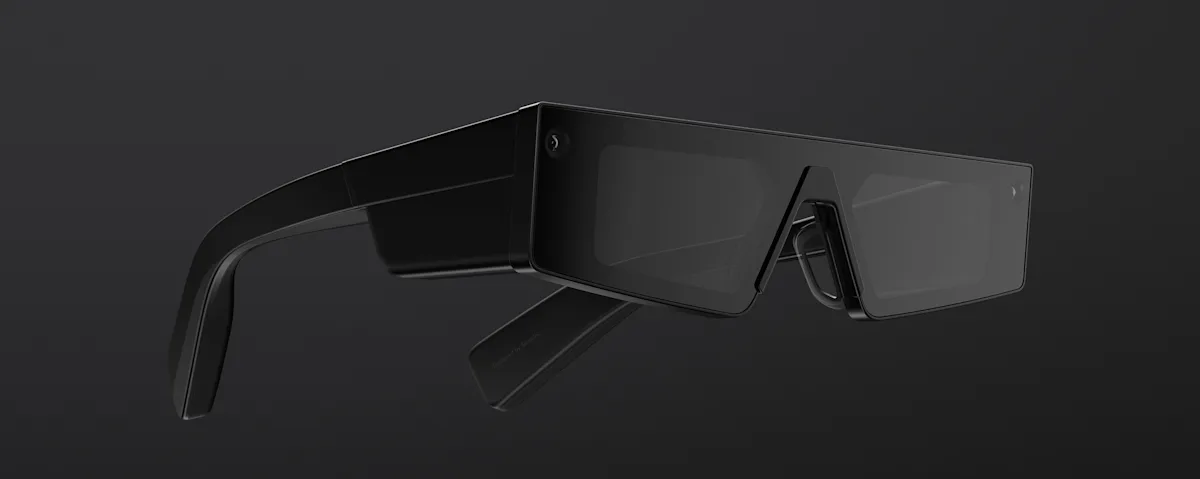
The system tracks a user's hand skeleton and determines when the hand grasps a virtual object. AR applications can use that grasp as an input for picking up or manipulating objects.
AVATAR DANCE ANIMATION SYSTEM
Analyzes live music for tempo and energy, then selects suitable dance movements for an avatar. The resulting animation adapts to both the music and the avatar's characteristics.
ENERGY-EFFICIENT ADAPTIVE 3D SENSING
The system identifies areas where camera-based depth estimates are uncertain and directs laser sensing toward those areas. This improves three-dimensional scene understanding while limiting sensing power consumption.
MANAGEMENT OF PSEUDORANDOM ANIMATION SYSTEM
Makes an animated character or effect move with controlled variation instead of repeating an identical sequence. Motion patterns, speeds, and probabilities determine how its control points animate within camera video.
MONOCULAR CAMERA DEFOCUS FACE MEASURING
Uses camera blur, facial landmarks, and a face mesh to estimate the physical size of a person's face. This supports more accurately scaled virtual products, such as eyewear.
FINGER GESTURE RECOGNITION VIA ACOUSTIC-OPTIC SENSOR FUSION
The system combines sounds and camera observations of a finger gesture to identify the user's action. It passes the recognized gesture to an XR application as an input command.
REAL-TIME SELFIE PERSPECTIVE UNDISTORTION ON MOBILES BY IM2IM TRANSLATION
The system makes a close-up selfie look as though the camera were farther from the face. It first warps the image and then repairs facial details to reduce perspective distortion.
EGOCENTRIC HUMAN BODY POSE TRACKING
The system combines tracking from AR glasses with electromagnetic wrist sensors to estimate the wearer's full-body pose. It corrects magnetic interference and accumulated tracking drift by comparing measurements from different sensors.
MUSIC REACTIVE ANIMATION OF HUMAN CHARACTERS
The system listens to music and generates a sequence of dance poses for an animated character. Each new pose takes account of the music and the character's previous movement.
ENGAGEMENT PREDICTION NETWORK BASED ON VIDEO CONTENT
Predicts how engaging a video will be from its content. Such predictions can help Spotlight rank videos, including uploads without much interaction history.
GENERATING TEXT-TO-MOTION ANIMATIONS FROM PARTIALLY ANNOTATED DATASETS
Generates coordinated body, hand, and facial animation from text descriptions. It learns from incompletely labeled motion datasets so creators can produce expressive character movement without manually animating every part.
PERSONALIZED SELFIE AESTHETIC ENHANCEMENT
Enhances a selfie according to text instructions, the requested strength of the change, and learned aesthetic preferences. A personalized image-generation model produces the final result while retaining the user's appearance.
AUDIO RESPONSE MESSAGES
A message's visual effects change when the viewer speaks or produces sounds. A trained model recognizes keywords or sound intensity and selects the corresponding visual response.
GENERIC FACE IMAGE QUALITY ASSESSMENT TRANSFORMER
The model scores the visual quality of face images by learning common image defects and examining important facial regions. It combines those regional assessments into an overall quality score.
GRASPING VIRTUAL OBJECTS WITH REAL HANDS FOR EXTENDED REALITY
The system tracks a user's hand skeleton and determines when the hand grasps a virtual object. AR applications can use that grasp as an input for picking up or manipulating objects.
GRASPING VIRTUAL OBJECTS WITH REAL HANDS FOR EXTENDED REALITY
The system tracks a user's hand skeleton and determines when the hand grasps a virtual object. AR applications can use that grasp as an input for picking up or manipulating objects.
REAL-TIME SELFIE PERSPECTIVE UNDISTORTION ON MOBILES BY IM2IM TRANSLATION
The system makes a close-up selfie look as though the camera were farther from the face. It first warps the image and then repairs facial details to reduce perspective distortion.
ENERGY-EFFICIENT ADAPTIVE 3D SENSING
The system identifies areas where camera-based depth estimates are uncertain and directs laser sensing toward those areas. This improves three-dimensional scene understanding while limiting sensing power consumption.
AR MIRROR
A camera behind a transparent display captures the person standing in front of an AR mirror. Image processing removes display-induced blur, noise, and wiring artifacts so the mirror can produce cleaner camera-based AR experiences.
AR MIRROR
A camera behind a transparent display captures the person standing in front of an AR mirror. Image processing removes display-induced blur, noise, and wiring artifacts so the mirror can produce cleaner camera-based AR experiences.
SELFIE PERSPECTIVE UNDISTORTION BY 3D FACE GAN INVERSION
Makes a close-up selfie look as though it was taken from farther away. A learned 3D face model adjusts the virtual camera perspective to reduce exaggerated facial proportions.
NEURAL NETWORKS FOR CHANGING CHARACTERISTICS OF VOCALS
A neural network changes the character of a recorded voice, such as making a masculine-sounding voice sound feminine. It works by converting audio into a frequency image, transforming that image, and converting it back into sound.
NEURAL NETWORKS FOR ACCOMPANIMENT EXTRACTION FROM SONGS
The system separates a song's instrumental backing from its vocals. It converts the song into a frequency image, processes it with a neural network, and converts the result back into audio.
GENERATING TEXT-TO-MOTION ANIMATIONS FROM PARTIALLY ANNOTATED DATASETS
Generates coordinated body, hand, and facial animation from text descriptions. It learns from incompletely labeled motion datasets so creators can produce expressive character movement without manually animating every part.
OBJECT SCALE UTILIZING AWAY-FACING IMAGES
The device uses stereo images of its surroundings to determine the real-world size of an object seen by its other camera. This helps size virtual products correctly rather than relying on an image's apparent proportions.
AVATAR DANCE ANIMATION SYSTEM
Analyzes live music for tempo and energy, then selects suitable dance movements for an avatar. The resulting animation adapts to both the music and the avatar's characteristics.
GRASPING VIRTUAL OBJECTS WITH REAL HANDS FOR EXTENDED REALITY
The system tracks a user's hand skeleton and determines when the hand grasps a virtual object. AR applications can use that grasp as an input for picking up or manipulating objects.
DANCEABILITY SCORE GENERATOR
A neural network scores how danceable successive portions of live audio are. Those scores and each avatar's characteristics control the real-time dancing animation of two avatars.
DANCEABILITY SCORE GENERATOR
A neural network scores how danceable successive portions of live audio are. Those scores and each avatar's characteristics control the real-time dancing animation of two avatars.
MUSIC REACTIVE ANIMATION OF HUMAN CHARACTERS
The system listens to music and generates a sequence of dance poses for an animated character. Each new pose takes account of the music and the character's previous movement.
ENERGY-EFFICIENT ADAPTIVE 3D SENSING
The system identifies areas where camera-based depth estimates are uncertain and directs laser sensing toward those areas. This improves three-dimensional scene understanding while limiting sensing power consumption.
MANAGEMENT OF PSEUDORANDOM ANIMATION SYSTEM
Makes an animated character or effect move with controlled variation instead of repeating an identical sequence. Motion patterns, speeds, and probabilities determine how its control points animate within camera video.
EGOCENTRIC HUMAN BODY POSE TRACKING
The system combines tracking from AR glasses with electromagnetic wrist sensors to estimate the wearer's full-body pose. It corrects magnetic interference and accumulated tracking drift by comparing measurements from different sensors.
FINGER GESTURE RECOGNITION VIA ACOUSTIC-OPTIC SENSOR FUSION
The system combines sounds and camera observations of a finger gesture to identify the user's action. It passes the recognized gesture to an XR application as an input command.
STATE-SPACE SYSTEM FOR PSEUDORANDOM ANIMATION
The system assigns probabilities to different movements and speeds for parts of an animated model. Selecting among them gives the animation varied motion instead of an identical repeated sequence.
MONOCULAR CAMERA DEFOCUS FACE MEASURING
Uses camera blur, facial landmarks, and a face mesh to estimate the physical size of a person's face. This supports more accurately scaled virtual products, such as eyewear.
MONOCULAR CAMERA DEFOCUS FACE MEASURING
Uses camera blur, facial landmarks, and a face mesh to estimate the physical size of a person's face. This supports more accurately scaled virtual products, such as eyewear.
AUTOMATED DANCE ANIMATION
Generates varied dance movements for an animated character by selecting motion patterns probabilistically. Those movements can be synchronized with audio.
ENERGY-EFFICIENT ADAPTIVE 3D SENSING
The system identifies areas where camera-based depth estimates are uncertain and directs laser sensing toward those areas. This improves three-dimensional scene understanding while limiting sensing power consumption.
SELFIE PERSPECTIVE UNDISTORTION BY 3D FACE GAN INVERSION
Makes a close-up selfie look as though it was taken from farther away. A learned 3D face model adjusts the virtual camera perspective to reduce exaggerated facial proportions.
AVATAR DANCE ANIMATION SYSTEM
Analyzes live music for tempo and energy, then selects suitable dance movements for an avatar. The resulting animation adapts to both the music and the avatar's characteristics.
SHORTCUT KEYPAD FOR VISUAL ELECTRONIC COMMUNICATIONS
A user selects a shortcut to send a visual signal to another person. The recipient's interface highlights the corresponding item to indicate receipt.
HIGH-DEFINITION REAL-TIME VIEW SYNTHESIS
The system combines images taken from different viewpoints into layered scene representations. It uses those layers to render a new camera angle in real time.
STATE-SPACE SYSTEM FOR PSEUDORANDOM ANIMATION
The system assigns probabilities to different movements and speeds for parts of an animated model. Selecting among them gives the animation varied motion instead of an identical repeated sequence.
NEURAL NETWORKS FOR ACCOMPANIMENT EXTRACTION FROM SONGS
The system separates a song's instrumental backing from its vocals. It converts the song into a frequency image, processes it with a neural network, and converts the result back into audio.
NEURAL NETWORKS FOR CHANGING CHARACTERISTICS OF VOCALS
A neural network changes the character of a recorded voice, such as making a masculine-sounding voice sound feminine. It works by converting audio into a frequency image, transforming that image, and converting it back into sound.
AUDIO RESPONSE MESSAGES
A message's visual effects change when the viewer speaks or produces sounds. A trained model recognizes keywords or sound intensity and selects the corresponding visual response.
AUTOMATED DANCE ANIMATION
Generates varied dance movements for an animated character by selecting motion patterns probabilistically. Those movements can be synchronized with audio.
MUSIC REACTIVE ANIMATION OF HUMAN CHARACTERS
The system listens to music and generates a sequence of dance poses for an animated character. Each new pose takes account of the music and the character's previous movement.
MUSIC REACTIVE AMIMATION OF HUMAN CHARACTERS
The invention appears to animate human characters in response to music. A likely application is a camera effect that makes a person or character move with an audio track.
MANAGEMENT OF PSEUDORANDOM ANIMATION SYSTEM
Makes an animated character or effect move with controlled variation instead of repeating an identical sequence. Motion patterns, speeds, and probabilities determine how its control points animate within camera video.
MATCHING AUDIO TO A STATE-SPACE MODEL FOR PSEUDORANDOM ANIMATION
Makes an animated character react to sounds picked up by the microphone. Randomly selected movement states keep the animation varied while audio characteristics control its motion.
NEURAL NETWORKS FOR CHANGING CHARACTERISTICS OF VOCALS
A neural network changes the character of a recorded voice, such as making a masculine-sounding voice sound feminine. It works by converting audio into a frequency image, transforming that image, and converting it back into sound.
NEURAL NETWORKS FOR ACCOMPANIMENT EXTRACTION FROM SONGS
The system separates a song's instrumental backing from its vocals. It converts the song into a frequency image, processes it with a neural network, and converts the result back into audio.
SHORTCUT KEYPAD FOR VISUAL ELECTRONIC COMMUNICATIONS
A user selects a shortcut to send a visual signal to another person. The recipient's interface highlights the corresponding item to indicate receipt.
SELECTABLE ELEMENT TO RETRIEVE MEDIA CONTENT ITEMS
Tapping a control saves the time and location of a moment. The app can later use that record to retrieve photos or videos uploaded by other devices from the same place or time.
SELECTOR INPUT DEVICE TO PERFORM OPERATIONS ON CAPTURED MEDIA CONTENT ITEMS
A physical selector chooses what processing to perform on a captured image. Activating it takes a picture and sends it to a server for the selected operation.
MATCHING AUDIO TO A STATE-SPACE MODEL FOR PSEUDORANDOM ANIMATION
Makes an animated character react to sounds picked up by the microphone. Randomly selected movement states keep the animation varied while audio characteristics control its motion.
MANAGEMENT OF PSEUDORANDOM ANIMATION SYSTEM
Makes an animated character or effect move with controlled variation instead of repeating an identical sequence. Motion patterns, speeds, and probabilities determine how its control points animate within camera video.
STATE-SPACE SYSTEM FOR PSEUDORANDOM ANIMATION
The system assigns probabilities to different movements and speeds for parts of an animated model. Selecting among them gives the animation varied motion instead of an identical repeated sequence.
AUTOMATED DANCE ANIMATION
Generates varied dance movements for an animated character by selecting motion patterns probabilistically. Those movements can be synchronized with audio.
AUDIO RESPONSE MESSAGES
A message's visual effects change when the viewer speaks or produces sounds. A trained model recognizes keywords or sound intensity and selects the corresponding visual response.