
Snap Inc.2016
Spectacles Gen 1 & 2
Hands-free camera sunglasses capturing circular video & photos with LED recording ring, water resistance, Bluetooth/Wi-Fi transfer to Memories, Snapbot vending machines, and battery charging case.
Snap's entire hardware and spatial computing lineage: Spectacles Gen 1–2, Spectacles 3, AR Waveguide Spectacles (Gen 4–5), Snap OS 1.0–2.0, consumer Specs (2026), and Pixy.
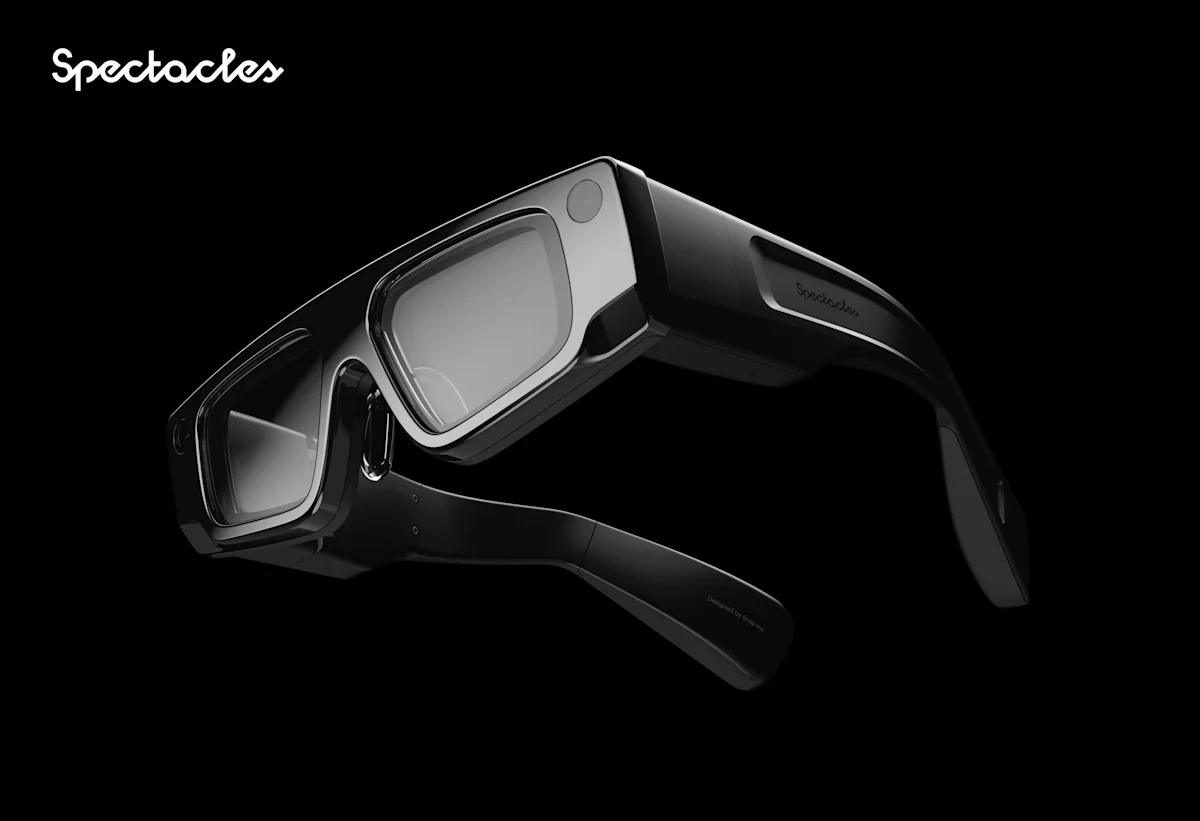
Snap Inc.2016
Hands-free camera sunglasses capturing circular video & photos with LED recording ring, water resistance, Bluetooth/Wi-Fi transfer to Memories, Snapbot vending machines, and battery charging case.

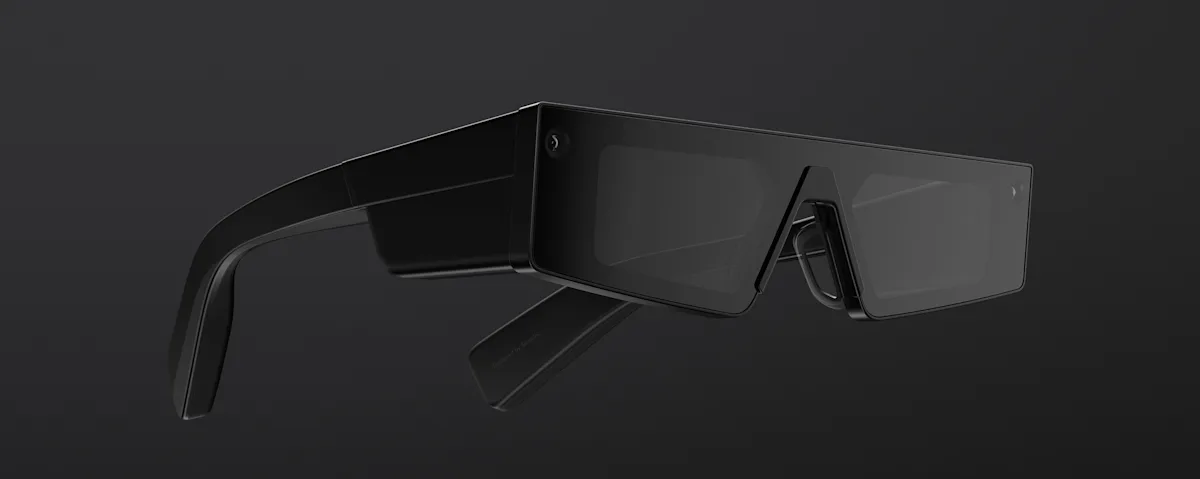
Snap Inc.2019
Dual-HD-camera eyewear computing depth maps and 3D point clouds from stereo vision to apply 3D lighting, depth filters, and spatial AR effects after capture.
Snap Inc.2021
Standalone see-through augmented reality smart glasses featuring WaveOptics diffractive waveguides, LCoS/micro-LED optical projectors, electrochromic tinting, thermal/battery design, and 6DoF SLAM cameras.
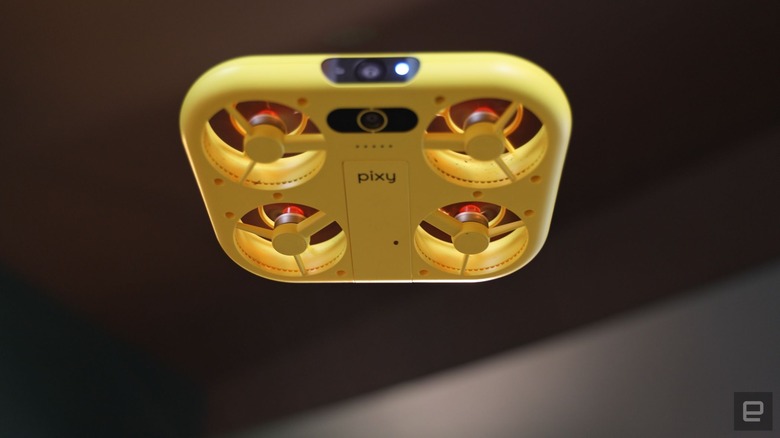
Snap Inc.2022
Pocket autonomous yellow selfie drone launching from palm, executing preset hover/orbit/follow flight paths, landing in hand, and wirelessly transferring clips to Memories. Halted Aug 2022.
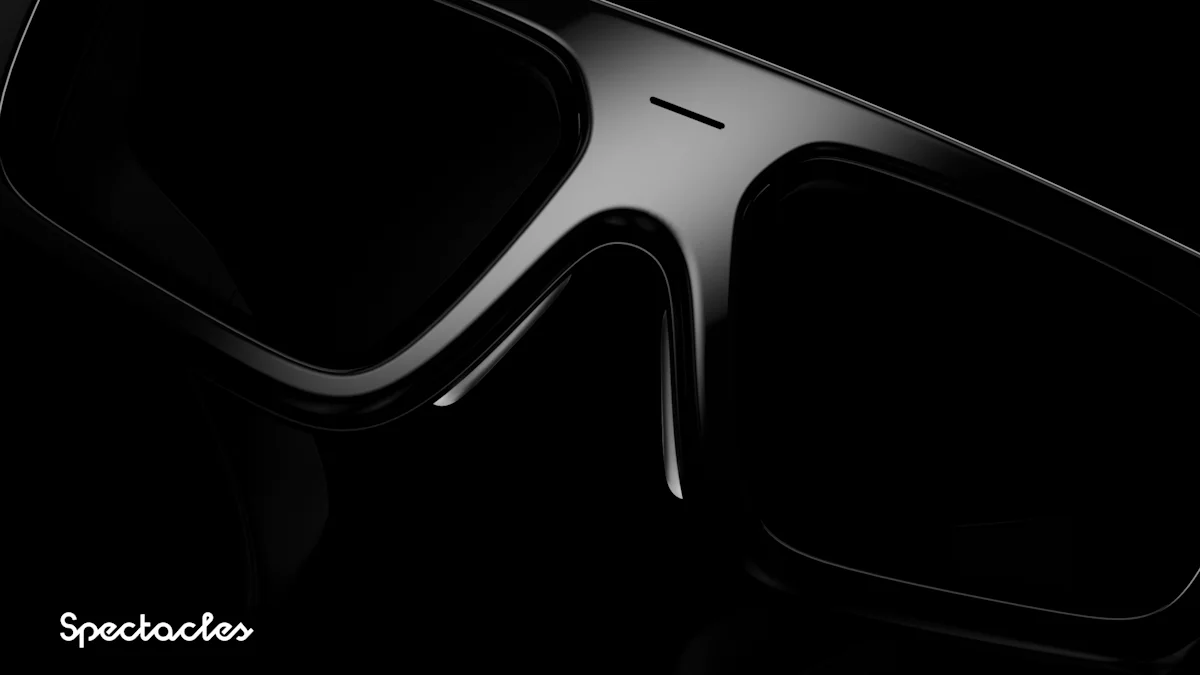
Snap Inc.2024
Spatial computing OS for AR glasses covering palm-menu hand gesture interaction, gaze/eye tracking, voice + neural (NextMind) input, Travel Mode motion stabilization, Sync Kit multi-user colocation, and spatial browsers/payments.
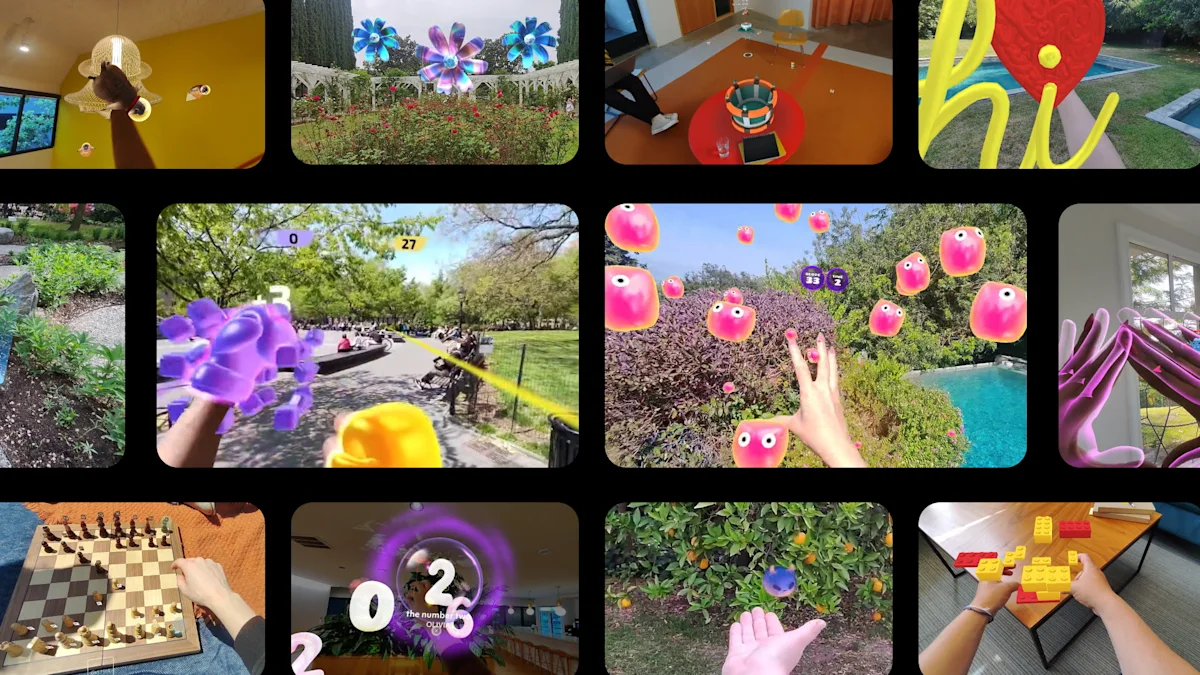
Snap Inc.2026
Lightweight, consumer-ready standalone AR glasses platform succeeding developer Spectacles 5, pairing miniaturized waveguides with multimodal AI assistants and full Snap OS Lens compatibility.
Click any person to see their role, tenure, features, and connections.
DesignerSnap 2021–2026
DesignerSnap 2016–2025
DesignerSnap 2018–2025
DesignerSnap 2016–2020
DesignerSnap 2022–2026
DesignerSnap 2015–2022
DesignerSnap 2015–2018
DesignerSnap 2016–2022
DesignerSnap 2024
DesignerSnap 2016–2020
DesignerSnap 2016–2024
DesignerSnap 2019–2021
DesignerSnap 2024
DesignerSnap 2022
DesignerSnap 2016
DesignerSnap 2024
Click any person to see their collaborator network, or jump to related features built by the same team.
Inside This Pillar (6)
Built by the Same People
107 builders · 182 patents
136 builders · 280 patents
225 builders · 428 patents
159 builders · 278 patents
170 builders · 294 patents
Click anyone below to see who they worked with on Spectacles, Specs & AR Hardware, or open their profile to explore their full collaborator network.
Software Engineer · 139 patents on this feature
| Builder A | Builder B | Shared Patents |
|---|---|---|
| Jonathan M. Rodriguez II | Russell Douglas Patton | 52 |
| Jason Heger | Gerald Nilles | 46 |
Product milestones paired with year-by-year R&D patent waves and the specific capabilities laddering into this feature. Click any milestone, year bar, or capability pill to drill into its patents and builders.
Click any year bar to inspect its filings and builders inline. Highlighted bar marks public launch year; muted bars reflect pre-launch R&D.
“From Gen 1 circular-video sunglasses (2016) to dual-camera Spectacles 3 (2019), standalone AR waveguide Spectacles 4–5 + Snap OS (2021–2025), Pixy drone (2022), and consumer Specs (2026).”Source Filing
AUGMENTED REALITY MOOD BOARD MANIPULATION
A user can grab a shared handle to move or rotate an entire collection of images in AR glasses. Every item follows the handle, keeping the gallery together.
VIRTUAL INTERFACES FOR CONTROLLING IOT DEVICES
An AR interface places virtual controls in the user's surroundings. Hand or foot interaction with those controls can trigger commands to a nearby connected device.
MISALIGNED VANTAGE POINT MITIGATION FOR COMPUTER STEREO VISION
The system compares matching visual features seen by two cameras to detect unexpected camera alignment. It calculates a correction so stereo vision remains accurate.
BEACONS FOR LOCALIZATION AND CONTENT DELIVERY TO WEARABLE DEVICES
AR glasses detect nearby fixed beacons to determine where the wearer is and present relevant audio, text, or video. A nearby scannable code can activate access to a beacon.
BYSTANDER SPEECH COMMAND REJECTION FOR WEARABLE DEVICES
Spatially separated microphones help the glasses determine whether their wearer is speaking. This allows voice controls to reject commands spoken by nearby people.
DISPLAY DEVICE WITH OPTICAL WAVEGUIDE AND PROJECTOR
A projector sends imagery through an optical waveguide. Moving its housing changes whether the user can see the real world through the display region.
CONTROLLING AUGMENTED REALITY EFFECTS THROUGH MULTI-MODAL HUMAN INTERACTION
Displays instructions for interacting with virtual objects, then combines hand gestures and spoken commands to change selected objects. This enables more natural control of an AR experience.
SCULPTING AUGMENTED REALITY CONTENT USING GESTURES IN A MESSAGING SYSTEM
The system tracks two fingers making a pinch and detects when they touch a virtual object. Moving the fingers changes the object by adding AR content, enabling gesture-based sculpting.
AUGMENTED REALITY HEADSET WITH CONTROLLABLY DIMMABLE FILTER
An adjustable filter covers both the wearer's viewing window and an outward-facing camera window. Changing its opacity controls how visible the camera is through the glasses.
DECODING THE VISUAL ATTENTION OF AN INDIVIDUAL FROM ELECTROENCEPHALOGRAPHIC SIGNALS
On-screen objects display distinct animated patterns, and brain signals reveal which pattern the user is concentrating on. This enables attention-based selection of interface objects.
POWER ATTRIBUTION AND THROTTLING ON MOBILE DEVICES
The device estimates how much power and heat each application produces through individual resources. It can ask an application to reduce its workload or throttle it when its budget is exceeded.
IMAGE CAPTURE EYEWEAR WITH CONTEXT-BASED SENDING
Camera glasses compare a captured image’s location, content, or quality with user-selected rules. Matching images are automatically sent to designated recipients.
DYNAMICALLY ORIENTATED LABELS FOR XR USER INTERFACES
Virtual controls sit on tracked locations on the user's hand. Their labels turn toward the viewer as the user's hand or head moves, keeping them readable.
STEERABLE CAMERA FOR AR HAND TRACKING
The AR system estimates the user’s hand position from camera images and directs a steerable camera toward it to maintain tracking for gesture input.
VISUAL AND AUDIO WAKE COMMANDS
The glasses keep hand tracking in a low-power state until a camera detects a possible wake gesture. They then activate full tracking, verify the gesture, and launch an AR application.
BENDING-ASSISTED CALIBRATION FOR EXTENDED REALITY TRACKING
Uses how much an XR wearable bends when worn to decide whether saved wearer calibration is still appropriate. It then starts tracking with either the existing biometric data or a mode that does not reuse it.
DISPLAY COLOR BREAKUP REDUCTION DURING EYE MOVEMENT
The system predicts how long a rapid eye movement will last and briefly adjusts the display to reduce rainbow-like color artifacts. Normal display settings resume afterward.
PROJECTOR WITH FIELD LENS
A curved lens and an offset display steer the projected image while keeping illumination even. This arrangement reduces projector size for integration into AR glasses.
EYEWEAR ELECTROCHROMIC LENS WITH MULTIPLE TINT REGIONS
Smart glasses independently adjust how much light reaches the wearer's eyes and their cameras. Different lens regions and dye formulations allow separate tint ranges for viewing and image capture.
COLLABORATIVE AUGMENTED REALITY EYEWEAR WITH EGO MOTION ALIGNMENT
Two pairs of AR glasses align their virtual worlds by tracking each other's movement rather than scanning a shared marker. This lets both wearers see shared virtual objects in the same physical location.
EYEWEAR DEVICE WITH THERMAL VAPOR CHAMBER
A lightweight vapor chamber spreads heat along the glasses' temples instead of concentrating it near the electronics. An insulating outer layer protects the wearer, while the bent internal structure helps keep the glasses snug.
SYSTEM AND METHOD FOR DRIVING A PIXEL WITH OPTIMIZED POWER AND AREA
The circuit reduces display size and power consumption by coordinating how colored pixels are driven. One arrangement keeps a red pixel on while sequencing blue and two green pixels.
AR NAVIGATION AID FOR USER GUIDANCE
When an AR target lies outside the display's field of view, an arrow guides the wearer toward it. The cue updates as the wearer moves their head and accounts for the rotation needed to reveal the target.
OPTICAL DEVICE
Microscopic structures attract or repel adhesive to control where it spreads between optical waveguides. This helps bond the display layers while maintaining their intended alignment.
USER AVATAR MOVEMENT CONTROL USING AN AUGMENTED REALITY EYEWEAR DEVICE
The glasses combine camera and motion-sensor readings to track movement in three dimensions. That movement controls an avatar or changes another virtual object displayed in the user's surroundings.