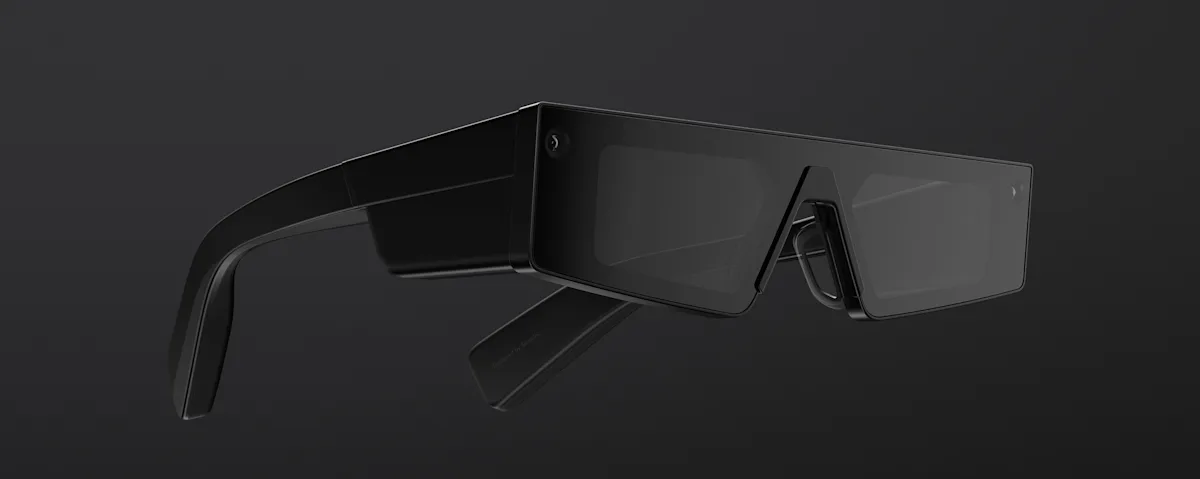
2021
AR Spectacles & Waveguide Optics
Standalone see-through augmented reality smart glasses featuring WaveOptics diffractive waveguides, LCoS/micro-LED optical projectors, electrochromic tinting, thermal/battery design, and 6DoF SLAM cameras.
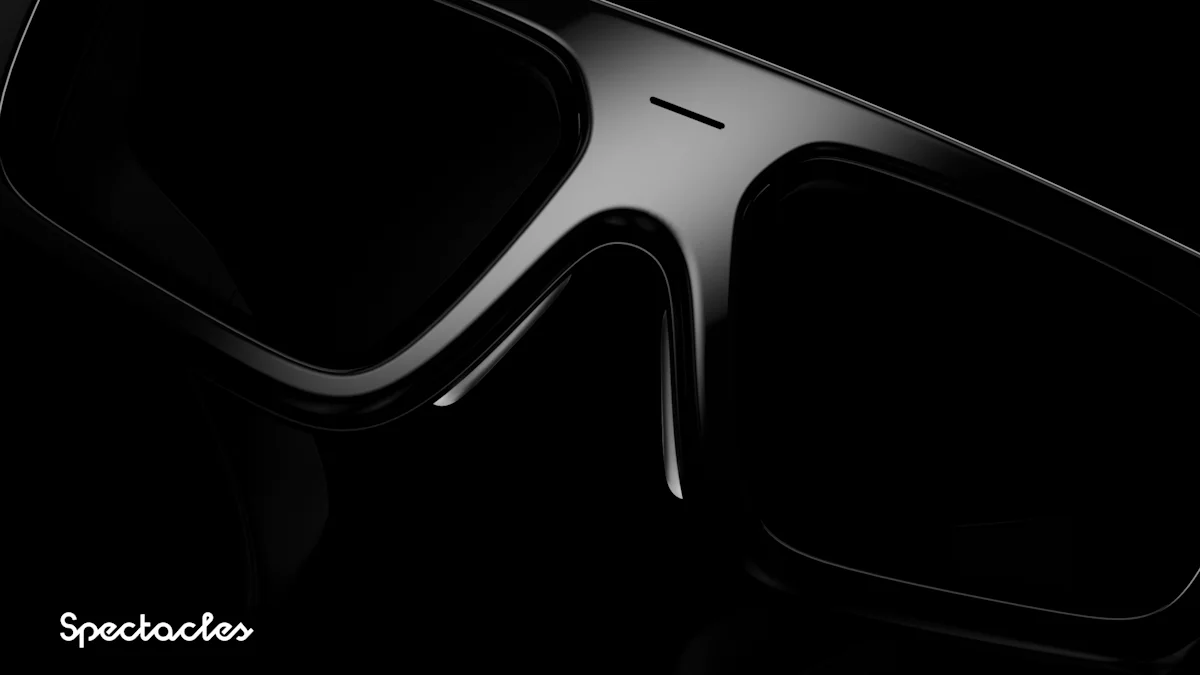
2024
Snap OS, Hand/Eye Tracking & Spatial UI
Spatial computing OS for AR glasses covering palm-menu hand gesture interaction, gaze/eye tracking, voice + neural (NextMind) input, Travel Mode motion stabilization, Sync Kit multi-user colocation, and spatial browsers/payments.
Tiago Miguel Pereira Torres
Software EngineerLead / StaffSoftware Engineer at Snap Inc.
Experience & Features Shipped
Collaborator Network
People who frequently built and filed patents with Tiago Miguel Pereira Torres. Click anyone in the network to see what they shipped together and which teammates overlap.
Hardware / OpticsResearchSoftware Eng
Number = shared patents · Dashed = teammates who also worked togetherMK
Matthias Kalkgruber
Hardware / Optics · 20 patents together (2022–2026)
Mutual Teammates (14)
View collaborator details as table (16 people)
| Collaborator | Role | Shared Patents | Years | Shared Features |
|---|---|---|---|---|
| Matthias Kalkgruber | Hardware / Optics | 20 | 2022–2026 | Snap OS, Hand/Eye Tracking & Spatial UI, AR Spectacles & Waveguide Optics |
| Clemens Birklbauer | Hardware / Optics | 5 | 2023–2025 | Snap OS, Hand/Eye Tracking & Spatial UI, AR Spectacles & Waveguide Optics |
| Georg Halmetschlager-Funek | Research | 5 | 2022–2025 | Snap OS, Hand/Eye Tracking & Spatial UI |
| Daniel Wolf | Software Eng | 4 | 2023–2026 | Snap OS, Hand/Eye Tracking & Spatial UI |
| Jeroen Diederik Hol | Software Eng | 4 | 2022–2024 | Snap OS, Hand/Eye Tracking & Spatial UI, AR Spectacles & Waveguide Optics |
| Ramzi Zahreddine | Research | 4 | 2022–2025 | AR Spectacles & Waveguide Optics |
| Thomas Faeulhammer | Research | 4 | 2023–2026 | Snap OS, Hand/Eye Tracking & Spatial UI |
| Thomas Muttenthaler | Software Eng | 4 | 2023–2026 | Snap OS, Hand/Eye Tracking & Spatial UI |
| Weston Welge | Research | 4 | 2022–2025 | AR Spectacles & Waveguide Optics |
| Chao Chen | Hardware / Optics | 3 | 2023–2026 | Snap OS, Hand/Eye Tracking & Spatial UI, AR Spectacles & Waveguide Optics |
| Jason Heger | Hardware / Optics | 3 | 2023–2026 | Snap OS, Hand/Eye Tracking & Spatial UI, AR Spectacles & Waveguide Optics |
| John Recchio | Hardware / Optics | 3 | 2023–2026 | Snap OS, Hand/Eye Tracking & Spatial UI, AR Spectacles & Waveguide Optics |
| Mark Kraz | Hardware / Optics | 3 | 2023–2026 | Snap OS, Hand/Eye Tracking & Spatial UI, AR Spectacles & Waveguide Optics |
| Michael Ryner | Hardware / Optics | 3 | 2023–2026 | Snap OS, Hand/Eye Tracking & Spatial UI, AR Spectacles & Waveguide Optics |
| Simon Schreiberhuber | Research | 3 | 2023–2025 | Snap OS, Hand/Eye Tracking & Spatial UI |
| Kai Zhou | Research | 2 | 2023–2024 | AR Spectacles & Waveguide Optics |
Go Deeper
Activity timeline by year
Activity Over Time
Tiago Miguel Pereira Torres's active years and patent cadence across public filings.
- 20 patents
Snap Inc.
· ~3 yrs
Patents by Year (2022–2026)
- 2
- 7
- 6
- 3
- 2
Underlying public patents (20)
- US20260339429A1Snap OS, Hand/Eye Tracking & Spatial UIView Filing
BENDING-ASSISTED CALIBRATION FOR EXTENDED REALITY TRACKING
Uses how much an XR wearable bends when worn to decide whether saved wearer calibration is still appropriate. It then starts tracking with either the existing biometric data or a mode that does not reuse it.
- US20260243556A1AR Spectacles & Waveguide Optics (Gen 4 & 5)View Filing
JOINT BENDING ESTIMATION
Measures how the glasses frame bends and combines those measurements with motion tracking. It corrects the tracking model so virtual objects remain aligned despite changes in the frame's shape.
- US20260016318A1Snap OS, Hand/Eye Tracking & Spatial UIView Filing
FIELD CALIBRATION OF AN AUGMENTED REALITY DEVICE
AR glasses compare newly observed surroundings with a previously trusted map to detect calibration drift. They then guide the wearer along a useful route while adjusting tracking parameters.
- US20250314885A1AR Spectacles & Waveguide Optics (Gen 4 & 5)View Filing
AR SYSTEM BENDING CORRECTION
Sensors detect forces that bend the glasses frame and estimate how its shape has changed. The system uses that estimate to correct captured video and keep virtual imagery properly aligned.
BENDING-ASSISTED CALIBRATION FOR EXTENDED REALITY TRACKING
Uses how much an XR wearable bends when worn to decide whether saved wearer calibration is still appropriate. It then starts tracking with either the existing biometric data or a mode that does not reuse it.
- USAPP-PCTUS2024048934Snap OS, Hand/Eye Tracking & Spatial UIView Filing
BENDING-ASSISTED CALIBRATION FOR EXTENDED REALITY TRACKING
Uses how much an XR wearable bends when worn to decide whether saved wearer calibration is still appropriate. It then starts tracking with either the existing biometric data or a mode that does not reuse it.
- USAPP-PCTUS2024048233Snap OS, Hand/Eye Tracking & Spatial UIView Filing
FIELD CALIBRATION OF AN AUGMENTED REALITY DEVICE
AR glasses compare newly observed surroundings with a previously trusted map to detect calibration drift. They then guide the wearer along a useful route while adjusting tracking parameters.
AR SYSTEM BENDING CORRECTION
Sensors detect forces that bend the glasses frame and estimate how its shape has changed. The system uses that estimate to correct captured video and keep virtual imagery properly aligned.
- USAPP-PCTUS2024022745AR Spectacles & Waveguide Optics (Gen 4 & 5)View Filing
EYEWEAR WITH INTER-PUPILLARY DISTANCE ESTIMATION
The glasses estimate the distance between the wearer's pupils by measuring how their frame bends around the head. They use that estimate to adjust virtual imagery for a more comfortable AR view.
- USAPP-PCTUS2024020013Snap OS, Hand/Eye Tracking & Spatial UIView Filing
TIGHT IMU-CAMERA COUPLING FOR DYNAMIC BENDING ESTIMATION
Combines camera and motion-sensor readings to detect changes in the geometry of flexible AR glasses. It adjusts virtual-content rendering so overlays remain correctly positioned as the device bends.
- USAPP-PCTUS2024016369AR Spectacles & Waveguide Optics (Gen 4 & 5)View Filing
JOINT BENDING ESTIMATION
Measures how the glasses frame bends and combines those measurements with motion tracking. It corrects the tracking model so virtual objects remain aligned despite changes in the frame's shape.
- USAPP-PCTUS2023082751Snap OS, Hand/Eye Tracking & Spatial UIView Filing
LONG TERM IN-FIELD IMU TEMPERATURE CALIBRATION
Learns how an inertial sensor's calibration changes with temperature during normal use. Updating that model helps AR glasses maintain accurate motion tracking as they warm up or encounter different environments.
- USAPP-PCTUS2023034375AR Spectacles & Waveguide Optics (Gen 4 & 5)View Filing
AR SYSTEM BENDING CORRECTION
Sensors detect forces that bend the glasses frame and estimate how its shape has changed. The system uses that estimate to correct captured video and keep virtual imagery properly aligned.
BENDING-ASSISTED CALIBRATION FOR EXTENDED REALITY TRACKING
Uses how much an XR wearable bends when worn to decide whether saved wearer calibration is still appropriate. It then starts tracking with either the existing biometric data or a mode that does not reuse it.
FIELD CALIBRATION OF AN AUGMENTED REALITY DEVICE
AR glasses compare newly observed surroundings with a previously trusted map to detect calibration drift. They then guide the wearer along a useful route while adjusting tracking parameters.
EYEWEAR WITH INTER-PUPILLARY DISTANCE ESTIMATION
The glasses estimate the distance between the wearer's pupils by measuring how their frame bends around the head. They use that estimate to adjust virtual imagery for a more comfortable AR view.
- US20240312145A1Snap OS, Hand/Eye Tracking & Spatial UIView Filing
TIGHT IMU-CAMERA COUPLING FOR DYNAMIC BENDING ESTIMATION
Combines camera and motion-sensor readings to detect changes in the geometry of flexible AR glasses. It adjusts virtual-content rendering so overlays remain correctly positioned as the device bends.
- US20240280355A1AR Spectacles & Waveguide Optics (Gen 4 & 5)View Filing
JOINT BENDING ESTIMATION
Measures how the glasses frame bends and combines those measurements with motion tracking. It corrects the tracking model so virtual objects remain aligned despite changes in the frame's shape.
- US20240192024A1Snap OS, Hand/Eye Tracking & Spatial UIView Filing
LONG TERM IN-FIELD IMU TEMPERATURE CALIBRATION
Learns how an inertial sensor's calibration changes with temperature during normal use. Updating that model helps AR glasses maintain accurate motion tracking as they warm up or encounter different environments.
AR SYSTEM BENDING CORRECTION
Sensors detect forces that bend the glasses frame and estimate how its shape has changed. The system uses that estimate to correct captured video and keep virtual imagery properly aligned.
Role verification & public sourcesInferred · Patents & Team Graph
During 2022–2023, Torres developed calibration and tracking methods that keep AR imagery aligned as glasses bend or sensors change temperature. The work combined camera, motion-sensor, and frame-deformation measurements to correct tracking and wearer calibration.
Role signal: The claims primarily concern sensor fusion, tracking models, and runtime calibration rather than optical component design or novel neural architectures. Twenty filings support inferred lead/staff seniority, with one squad and no external evidence establishing an exact title.
Original inventions 2022–2023; later filings through 2026 are continuations.
Also listed on filings as: TIAGO MIGUEL PEREIRA TORRES, Tiago Miguel Pereira Torres