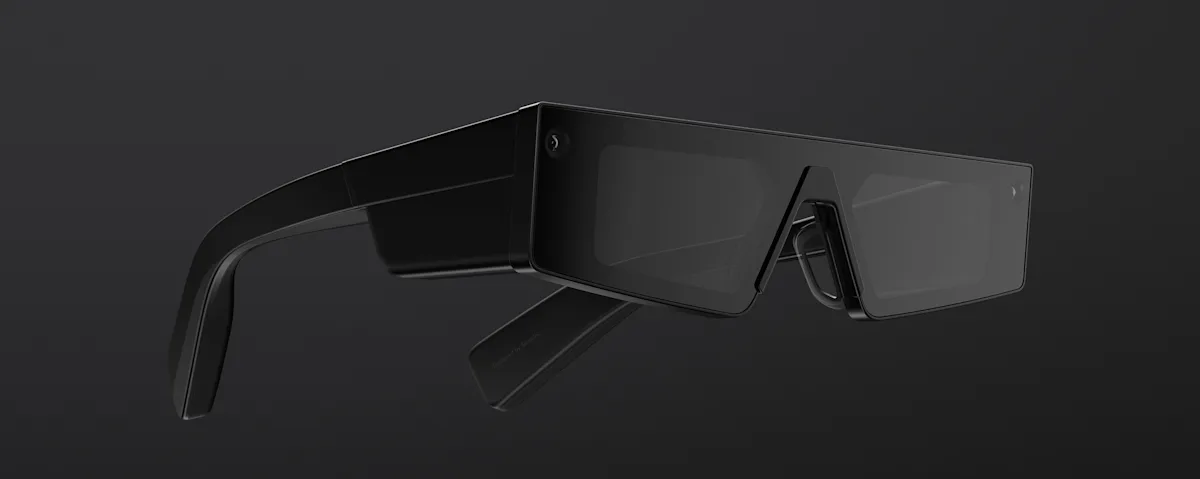
2021
AR Spectacles & Waveguide Optics
Standalone see-through augmented reality smart glasses featuring WaveOptics diffractive waveguides, LCoS/micro-LED optical projectors, electrochromic tinting, thermal/battery design, and 6DoF SLAM cameras.
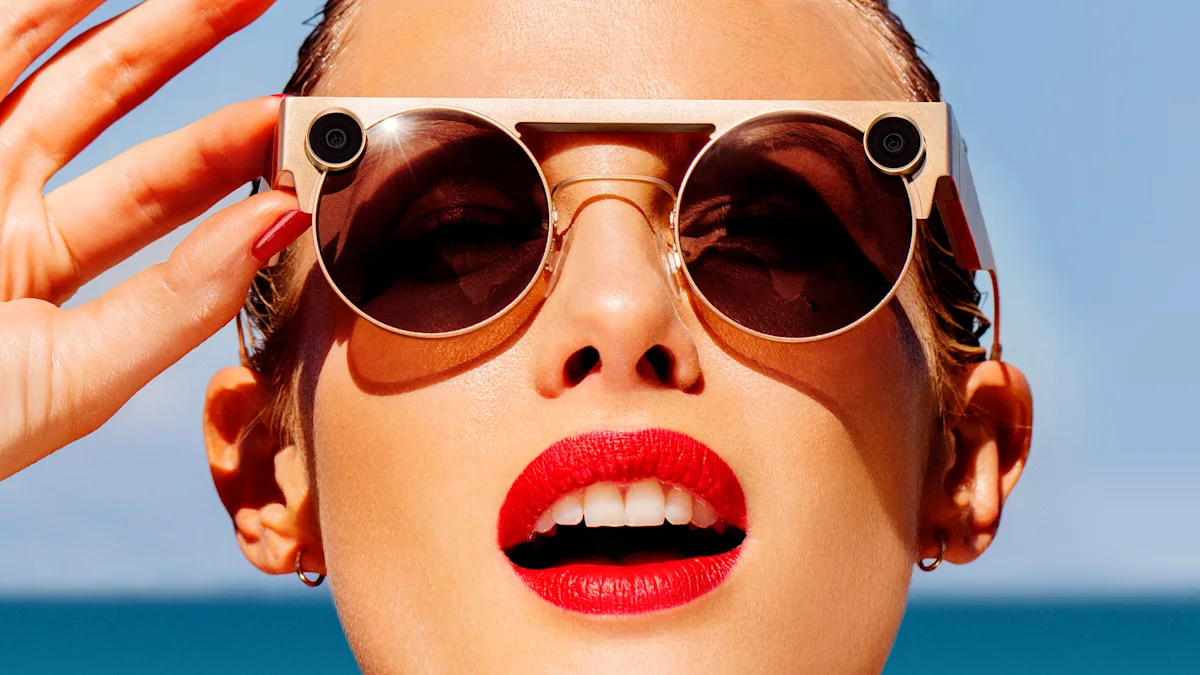
2019
Spectacles 3
Dual-HD-camera eyewear computing depth maps and 3D point clouds from stereo vision to apply 3D lighting, depth filters, and spatial AR effects after capture.

2016
Spectacles Gen 1 & 2
Hands-free camera sunglasses capturing circular video & photos with LED recording ring, water resistance, Bluetooth/Wi-Fi transfer to Memories, Snapbot vending machines, and battery charging case.
Core Platform & Infrastructure
Low-level networking, video/image codecs, compression, distributed storage, CDN routing, Android rewrite/startup performance, ML serving infra, and generic mobile OS optimizations.
Praveen Babu Vadivelu
Hardware / OpticsLead / StaffHardware Engineer at Snap Inc.
Experience & Features Shipped
Collaborator Network
People who frequently built and filed patents with Praveen Babu Vadivelu. Click anyone in the network to see what they shipped together and which teammates overlap.
Jason Heger
Hardware / Optics · 27 patents together (2019–2026)
Mutual Teammates (10)
View collaborator details as table (11 people)
| Collaborator | Role | Shared Patents | Years | Shared Features |
|---|---|---|---|---|
| Jason Heger | Hardware / Optics | 27 | 2019–2026 | AR Spectacles & Waveguide Optics, Spectacles 3, Spectacles Gen 1 & 2 |
| Gerald Nilles | Hardware / Optics | 24 | 2019–2026 | AR Spectacles & Waveguide Optics, Spectacles 3, Spectacles Gen 1 & 2 |
| John James Robertson | Hardware / Optics | 13 | 2019–2024 | Spectacles 3, Spectacles Gen 1 & 2 |
| Yu Jiang Tham | Research | 13 | 2019–2024 | Spectacles 3, Spectacles Gen 1 & 2 |
| Alex Feinman | Hardware / Optics | 7 | 2021–2025 | AR Spectacles & Waveguide Optics |
| Dunxu Hu | Hardware / Optics | 7 | 2021–2026 | AR Spectacles & Waveguide Optics |
| Ugur Olgun | Hardware / Optics | 7 | 2022–2026 | AR Spectacles & Waveguide Optics |
| Eric Nachtigall | Hardware / Optics | 4 | 2022–2026 | AR Spectacles & Waveguide Optics |
| John Recchio | Hardware / Optics | 4 | 2021–2025 | AR Spectacles & Waveguide Optics |
| Shaheen Moubedi | Hardware / Optics | 4 | 2021–2025 | AR Spectacles & Waveguide Optics |
| Jordan Wakser | Hardware / Optics | 3 | 2022–2024 | AR Spectacles & Waveguide Optics |
Go Deeper
Activity timeline by year
Activity Over Time
Praveen Babu Vadivelu's active years and patent cadence across public filings.
- 34 patents
Snap Inc.
· ~7 yrs
Patents by Year (2019–2026)
- 4
- 3
- 5
- 5
- 6
- 7
- 2
- 2
Underlying public patents (34)
- US20260323555A1Core Platform & InfrastructureView Filing
HIGH PRECISION POSITIONING FOR MOBILE DEVICE
The filing concerns improving a mobile device's position estimate using satellite-positioning and wireless timing techniques. The supplied record does not identify a specific consumer interface or application.
- US20260267393A1AR Spectacles & Waveguide Optics (Gen 4 & 5)View Filing
DETECTING WEAR STATUS OF WEARABLE DEVICE
Two radios on the wearable measure the strength of a signal passing between them. Comparing that strength with a threshold lets the device determine whether someone is wearing it.
- US20260072861A1AR Spectacles & Waveguide Optics (Gen 4 & 5)View Filing
DEBUG ACCESS OF EYEWEAR HAVING MULTIPLE SOCS
Engineers can diagnose multiple processors in the glasses through one USB connection. Switches let them bypass or shut down the USB hub so debugging connections do not unnecessarily keep the glasses awake.
- US20260040218A1AR Spectacles & Waveguide Optics (Gen 4 & 5)View Filing
EYEWEAR HAVING CURRENT CONSUMPTION OPTIMIZATION OF WIRELESS SYSTEM INTERFACE
The glasses keep a low-power communication interface active and switch on a faster interface only when needed. This reduces standby battery drain from wireless communications.
DETECTING WEAR STATUS OF WEARABLE DEVICE
Two radios on the wearable measure the strength of a signal passing between them. Comparing that strength with a threshold lets the device determine whether someone is wearing it.
- US20250097849A1Spectacles 3 (Dual-Camera 3D Depth Capture)View Filing
WEARABLE DEVICE LOCATION SYSTEMS
Speeds up location acquisition when wearable glasses capture content while keeping power-hungry circuitry asleep whenever possible. The location can be attached to the captured content after the fix completes.
- US20250094370A1AR Spectacles & Waveguide Optics (Gen 4 & 5)View Filing
EYEWEAR WITH A SYSTEM ON A CHIP WITH SIMULTANEOUS USB COMMUNICATIONS
Places processing chips on opposite sides of the glasses and divides work between them. This distributes the electronics and processing load across the frame.
CELLULAR ANTENNA ARCHITECTURES FOR AR CAPABLE WEARABLE DEVICES
The glasses distribute two cellular antennas across the front frame and temples alongside onboard electronics. This architecture accommodates wireless connectivity within a folding eyewear form factor.
- USAPP-PCTUS2024050366Core Platform & InfrastructureView Filing
HIGH PRECISION POSITIONING FOR MOBILE DEVICES
A device shares satellite signal information with another device so it can obtain a location fix using less power. Shared frequency and signal-strength information reduces the work needed to acquire satellite signals.
EYEWEAR HAVING CURRENT CONSUMPTION OPTIMIZATION OF WIRELESS SYSTEM INTERFACE
The glasses keep a low-power communication interface active and switch on a faster interface only when needed. This reduces standby battery drain from wireless communications.
WEARABLE DEVICE LOCATION SYSTEMS ARCHITECTURE
The glasses obtain a location fix while minimizing how long their higher-power processors remain awake. Location information can be attached to captured media after the fix completes.
DEBUG ACCESS OF EYEWEAR HAVING MULTIPLE SOCS
Engineers can diagnose multiple processors in the glasses through one USB connection. Switches let them bypass or shut down the USB hub so debugging connections do not unnecessarily keep the glasses awake.
HIGH PRECISION POSITIONING FOR MOBILE DEVICES
A device shares satellite signal information with another device so it can obtain a location fix using less power. Shared frequency and signal-strength information reduces the work needed to acquire satellite signals.
WEARABLE DEVICE LOCATION SYSTEMS
Speeds up location acquisition when wearable glasses capture content while keeping power-hungry circuitry asleep whenever possible. The location can be attached to the captured content after the fix completes.
- USAPP-PCTUS2023030235AR Spectacles & Waveguide Optics (Gen 4 & 5)View Filing
CELLULAR ARCHITECTURES FOR AR CAPABLE WEARABLE DEVICES
Describes how cellular connectivity could be integrated into an AR wearable. Without an abstract, the precise radio design and its use in released hardware remain uncertain.
- USAPP-PCTUS2023030154AR Spectacles & Waveguide Optics (Gen 4 & 5)View Filing
DETECTING WEAR STATUS OF WEARABLE DEVICE
Two radios on the wearable measure the strength of a signal passing between them. Comparing that strength with a threshold lets the device determine whether someone is wearing it.
WEARABLE DEVICE LOCATION SYSTEMS ARCHITECTURE
The glasses obtain a location fix while minimizing how long their higher-power processors remain awake. Location information can be attached to captured media after the fix completes.
- USAPP-PCTUS2022050141AR Spectacles & Waveguide Optics (Gen 4 & 5)View Filing
DEBUG ACCESS OF EYEWEAR HAVING MULTIPLE SOCS
Engineers can diagnose multiple processors in the glasses through one USB connection. Switches let them bypass or shut down the USB hub so debugging connections do not unnecessarily keep the glasses awake.
- USAPP-PCTUS2022047009AR Spectacles & Waveguide Optics (Gen 4 & 5)View Filing
EYEWEAR HAVING CURRENT CONSUMPTION OPTIMIZATION OF WIRELESS SYSTEM INTERFACE
The glasses keep a low-power communication interface active and switch on a faster interface only when needed. This reduces standby battery drain from wireless communications.
CELLULAR ANTENNA ARCHITECTURES FOR AR CAPABLE WEARABLE DEVICES
The glasses distribute two cellular antennas across the front frame and temples alongside onboard electronics. This architecture accommodates wireless connectivity within a folding eyewear form factor.
DETECTING WEAR STATUS OF WEARABLE DEVICE
Two radios on the wearable measure the strength of a signal passing between them. Comparing that strength with a threshold lets the device determine whether someone is wearing it.
- USAPP-PCTUS2022038886AR Spectacles & Waveguide Optics (Gen 4 & 5)View Filing
SYSTEM ON A CHIP WITH SIMULTANEOUS USB COMMUNICATIONS
Allows a system-on-chip to handle simultaneous USB communications. In wearable hardware, this could support concurrent connections or data flows rather than requiring them to alternate.
DEBUG ACCESS OF EYEWEAR HAVING MULTIPLE SOCS
Engineers can diagnose multiple processors in the glasses through one USB connection. Switches let them bypass or shut down the USB hub so debugging connections do not unnecessarily keep the glasses awake.
WEARABLE DEVICE LOCATION SYSTEMS
Speeds up location acquisition when wearable glasses capture content while keeping power-hungry circuitry asleep whenever possible. The location can be attached to the captured content after the fix completes.
EYEWEAR HAVING CURRENT CONSUMPTION OPTIMIZATION OF WIRELESS SYSTEM INTERFACE
The glasses keep a low-power communication interface active and switch on a faster interface only when needed. This reduces standby battery drain from wireless communications.
EYEWEAR WITH A SYSTEM ON A CHIP WITH SIMULTANEOUS USB COMMUNICATIONS
Places processing chips on opposite sides of the glasses and divides work between them. This distributes the electronics and processing load across the frame.
WEARABLE DEVICE LOCATION SYSTEMS ARCHITECTURE
The glasses obtain a location fix while minimizing how long their higher-power processors remain awake. Location information can be attached to captured media after the fix completes.
WEARABLE DEVICE LOCATION SYSTEMS
Speeds up location acquisition when wearable glasses capture content while keeping power-hungry circuitry asleep whenever possible. The location can be attached to the captured content after the fix completes.
- USAPP-PCTUS2020070099Spectacles Gen 1 & 2 (Circular Video Glasses & Charging Case)View Filing
WEARABLE DEVICE LOCATION SYSTEMS ARCHITECTURE
The glasses obtain a location fix while minimizing how long their higher-power processors remain awake. Location information can be attached to captured media after the fix completes.
WEARABLE DEVICE LOCATION SYSTEMS ARCHITECTURE
The glasses obtain a location fix while minimizing how long their higher-power processors remain awake. Location information can be attached to captured media after the fix completes.
- USAPP-PCTUS2019069103Spectacles 3 (Dual-Camera 3D Depth Capture)View Filing
WEARABLE DEVICE LOCATION SYSTEMS
Speeds up location acquisition when wearable glasses capture content while keeping power-hungry circuitry asleep whenever possible. The location can be attached to the captured content after the fix completes.
WEARABLE DEVICE LOCATION SYSTEMS
Speeds up location acquisition when wearable glasses capture content while keeping power-hungry circuitry asleep whenever possible. The location can be attached to the captured content after the fix completes.
WEARABLE DEVICE LOCATION SYSTEMS
Speeds up location acquisition when wearable glasses capture content while keeping power-hungry circuitry asleep whenever possible. The location can be attached to the captured content after the fix completes.
WEARABLE DEVICE LOCATION SYSTEMS ARCHITECTURE
The glasses obtain a location fix while minimizing how long their higher-power processors remain awake. Location information can be attached to captured media after the fix completes.
Role verification & public sourcesInferred · Patents & Team Graph
During the 2019–2026 invention window, Praveen Babu Vadivelu developed Spectacles electronics for wireless connectivity, low-power location tracking, and coordination between onboard processors. His inventions also cover radio-based wear detection and practical USB debugging access.
Role signal: The 0.68 hardware CPC ratio and antenna, processor-interface, power-management, and positioning filings indicate electronics engineering rather than optical research. Thirty-four filings and ten first-inventor credits support lead/staff seniority within a single hardware squad.
Also listed on filings as: Praveen Babu Vadivelu, PRAVEEN BABU VADIVELU