2021
AR Spectacles & Waveguide Optics
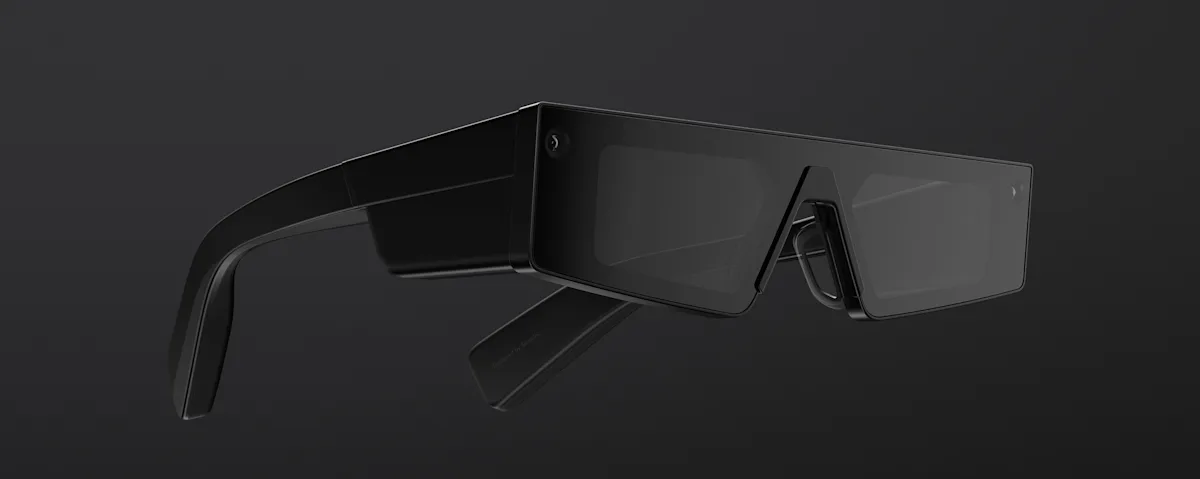
Standalone see-through augmented reality smart glasses featuring WaveOptics diffractive waveguides, LCoS/micro-LED optical projectors, electrochromic tinting, thermal/battery design, and 6DoF SLAM cameras.
Mohmed Salim Valera
Hardware / OpticsLead / StaffHardware Engineer at Snap Inc.
Experience & Features Shipped
Collaborator Network
People who frequently built and filed patents with Mohmed Salim Valera. Click anyone in the network to see what they shipped together and which teammates overlap.
Hardware / Optics
Number = shared patents · Dashed = teammates who also worked togetherCP
Ciaran Phelan
Hardware / Optics · 11 patents together (2021–2026)
Built Together
Mutual Teammates (10)
View collaborator details as table (16 people)
| Collaborator | Role | Shared Patents | Years | Shared Features |
|---|---|---|---|---|
| Ciaran Phelan | Hardware / Optics | 11 | 2021–2026 | AR Spectacles & Waveguide Optics |
| Michael David Simmonds | Hardware / Optics | 11 | 2011–2015 | AR Spectacles & Waveguide Optics |
| Gleb Siroki | Hardware / Optics | 7 | 2021–2025 | AR Spectacles & Waveguide Optics |
| Sebastien De Cunsel | Hardware / Optics | 7 | 2021–2025 | AR Spectacles & Waveguide Optics |
| Arseny Alexeev | Hardware / Optics | 6 | 2021–2025 | AR Spectacles & Waveguide Optics |
| Sophia Antonia Fox | Hardware / Optics | 6 | 2021–2025 | AR Spectacles & Waveguide Optics |
| Alexandra Crai | Hardware / Optics | 5 | 2023–2026 | AR Spectacles & Waveguide Optics |
| Kai Wang | Hardware / Optics | 5 | 2021–2025 | AR Spectacles & Waveguide Optics |
| Christian William Olavi Sol | Hardware / Optics | 4 | 2023–2026 | AR Spectacles & Waveguide Optics |
| David Louis Maxime Poussin | Hardware / Optics | 4 | 2022–2025 | AR Spectacles & Waveguide Optics |
| David Nicholas Crosby | Hardware / Optics | 4 | 2023–2026 | AR Spectacles & Waveguide Optics |
| Tom Vidar Michalsen | Hardware / Optics | 4 | 2022–2025 | AR Spectacles & Waveguide Optics |
| Choon How Gan | Hardware / Optics | 3 | 2021–2025 | AR Spectacles & Waveguide Optics |
| Cheng Shi | Hardware / Optics | 2 | 2022–2025 | AR Spectacles & Waveguide Optics |
| David Grey | Hardware / Optics | 2 | 2019–2022 | AR Spectacles & Waveguide Optics |
| Sumanta Talukdar | Hardware / Optics | 2 | 2022–2025 | AR Spectacles & Waveguide Optics |
Go Deeper
Activity timeline by year
Activity Over Time
Mohmed Salim Valera's active years and patent cadence across public filings.
- 44 patents
Snap Inc.
· ~14 yrs
Patents by Year (2011–2026)
- 2
- 3
- 4
- 3
- 1
- 2
- 5
- 3
- 4
- 9
- 6
- 2
Underlying public patents (44)
- US20260177831A1AR Spectacles & Waveguide Optics (Gen 4 & 5)View Filing
WAVEGUIDE FOR AUGMENTED REALITY OR VIRTUAL REALITY DISPLAY
Routes display light through a glasses waveguide using two overlapping diffraction patterns. Varying the optical structures across the waveguide controls how much light is directed toward the wearer.
- US20260126660A1AR Spectacles & Waveguide Optics (Gen 4 & 5)View Filing
WAVEGUIDE AND DIFFRACTION GRATING FOR AUGMENTED REALITY OR VIRTUAL REALITY DISPLAY
Different regions of the glasses' optical waveguide diffract light with different efficiencies. This reduces unwanted rainbow effects while delivering the displayed image to the wearer.
- US20260126656A1AR Spectacles & Waveguide Optics (Gen 4 & 5)View Filing
WAVEGUIDE FOR AN AUGMENTED REALITY OR VIRTUAL REALITY DISPLAY
Overlapping optical structures route image light through a transparent waveguide and toward the wearer. Their shape reduces premature light escape, helping deliver light through the intended output path.
DISPLAY FOR AUGMENTED REALITY OR VIRTUAL REALITY
Feeds two projectors into a waveguide and combines their partially overlapping viewing angles. This can expand the visible AR image presented through glasses.
- US20260063909A1AR Spectacles & Waveguide Optics (Gen 4 & 5)View Filing
DEVICE FOR AUGMENTED REALITY OR VIRTUAL REALITY DISPLAY
Overlapping optical gratings steer projector light through a transparent waveguide toward the wearer's eyes. Different diffraction strengths control how light is distributed across the display.
- US20250341668A1AR Spectacles & Waveguide Optics (Gen 4 & 5)View Filing
OPTICAL DEVICE FOR AUGMENTED REALITY DISPLAY
A specially patterned optical grating directs display light into an AR glasses waveguide. Its uneven diffraction response helps control where the light travels.
- US20250284133A1AR Spectacles & Waveguide Optics (Gen 4 & 5)View Filing
ANGULAR UNIFORMITY WAVEGUIDE FOR AUGMENTED OR VIRTUAL REALITY
Specially shaped microscopic structures guide display light through an AR waveguide and direct it toward the viewer. Their arrangement is designed to make the display more consistent across viewing angles.
- US20250389954A1AR Spectacles & Waveguide Optics (Gen 4 & 5)View Filing
MULTIPATH OPTICAL DEVICE
The display splits projector light across multiple paths inside a waveguide and redirects those paths toward the viewer. This provides an optical architecture for delivering AR imagery through glasses.
WAVEGUIDE AND DIFFRACTION GRATING FOR AUGMENTED REALITY OR VIRTUAL REALITY DISPLAY
Different regions of the glasses' optical waveguide diffract light with different efficiencies. This reduces unwanted rainbow effects while delivering the displayed image to the wearer.
- US20250076660A1AR Spectacles & Waveguide Optics (Gen 4 & 5)View Filing
OPTICAL STRUCTURE FOR AUGMENTED REALITY DISPLAY
Two optical waveguides distribute red, green, and blue projector light through diffraction gratings. This enables a compact full-color display for augmented-reality glasses.
DISPLAY FOR AUGMENTED REALITY OR VIRTUAL REALITY
Feeds two projectors into a waveguide and combines their partially overlapping viewing angles. This can expand the visible AR image presented through glasses.
- US20240411140A1AR Spectacles & Waveguide Optics (Gen 4 & 5)View Filing
DISPLAY FOR AUGMENTED REALITY
Routes projector light through a glasses waveguide and directs it toward the wearer’s eye. Additional optical elements return light toward the output region for another opportunity to exit toward the viewer.
DEVICE FOR AUGMENTED REALITY OR VIRTUAL REALITY DISPLAY
Overlapping optical gratings steer projector light through a transparent waveguide toward the wearer's eyes. Different diffraction strengths control how light is distributed across the display.
- US20250035929A1AR Spectacles & Waveguide Optics (Gen 4 & 5)View Filing
OPTICAL ASSEMBLY WITH DISPLACED INPUT PUPILS FOR AUGMENTED REALITY OR VIRTUAL REALITY DISPLAY
Routes two light inputs through a grating into mirrored display regions that expand the light in opposite directions. This supports the optical delivery of AR imagery through glasses.
- US20260267143A1AR Spectacles & Waveguide Optics (Gen 4 & 5)View Filing
WAVEGUIDE AND DIFFRACTION GRATING FOR AUGMENTED REALITY OR VIRTUAL REALITY DISPLAY FOR REDUCING THE VISIBLE APPEARANCE OF GRATING STRUCTURES
Blends the transition between two patterned regions of an AR display waveguide. This reduces visible seams in the optics through which the wearer sees projected imagery.
ANGULAR UNIFORMITY WAVEGUIDE FOR AUGMENTED OR VIRTUAL REALITY
Specially shaped microscopic structures guide display light through an AR waveguide and direct it toward the viewer. Their arrangement is designed to make the display more consistent across viewing angles.
DISPLAY FOR AUGMENTED REALITY OR VIRTUAL REALITY
Feeds two projectors into a waveguide and combines their partially overlapping viewing angles. This can expand the visible AR image presented through glasses.
WAVEGUIDE AND DIFFRACTION GRATING FOR AUGMENTED REALITY OR VIRTUAL REALITY DISPLAY
Different regions of the glasses' optical waveguide diffract light with different efficiencies. This reduces unwanted rainbow effects while delivering the displayed image to the wearer.
DEVICE AND METHOD FOR COMPENSATING EFFECTS OF PANTOSCOPIC TILT OR WRAP/SWEEP TILT ON AN IMAGE PRESENTED ON AN AUGMENTED REALITY OR VIRTUAL REALITY DISPLAY
Arranges optical gratings so an AR image remains correctly presented when the glasses' lenses tilt downward or wrap around the face. This accommodates eyewear geometry without misaligning the displayed image.
OPTICAL STRUCTURE FOR AUGMENTED REALITY DISPLAY
Two optical waveguides distribute red, green, and blue projector light through diffraction gratings. This enables a compact full-color display for augmented-reality glasses.
WAVEGUIDE FOR AUGMENTED REALITY OR VIRTUAL REALITY DISPLAY
Routes display light through a glasses waveguide using two overlapping diffraction patterns. Varying the optical structures across the waveguide controls how much light is directed toward the wearer.
OPTICAL DEVICE FOR AUGMENTED REALITY DISPLAY
A specially patterned optical grating directs display light into an AR glasses waveguide. Its uneven diffraction response helps control where the light travels.
WAVEGUIDE FOR AN AUGMENTED REALITY OR VIRTUAL REALITY DISPLAY
Overlapping optical structures route image light through a transparent waveguide and toward the wearer. Their shape reduces premature light escape, helping deliver light through the intended output path.
WAVEGUIDE FOR AN AUGMENTED REALITY OR VIRTUAL REALITY DISPLAY
Overlapping optical structures route image light through a transparent waveguide and toward the wearer. Their shape reduces premature light escape, helping deliver light through the intended output path.
DISPLAY FOR AUGMENTED REALITY
Routes projector light through a glasses waveguide and directs it toward the wearer’s eye. Additional optical elements return light toward the output region for another opportunity to exit toward the viewer.
IMPROVED ANGULAR UNIFORMITY WAVEGUIDE FOR AUGMENTED OR VIRTUAL REALITY
Uses specially shaped optical structures to redirect image light through a glasses waveguide toward the wearer. The arrangement makes the displayed image more consistent across viewing angles.
DISPLAY FOR AUGMENTED REALITY OR VIRTUAL REALITY
Feeds two projectors into a waveguide and combines their partially overlapping viewing angles. This can expand the visible AR image presented through glasses.
DEVICE FOR AUGMENTED REALITY OR VIRTUAL REALITY DISPLAY
Overlapping optical gratings steer projector light through a transparent waveguide toward the wearer's eyes. Different diffraction strengths control how light is distributed across the display.
DEVICE FOR AUGMENTED REALITY OR VIRTUAL REALITY DISPLAY
Overlapping optical gratings steer projector light through a transparent waveguide toward the wearer's eyes. Different diffraction strengths control how light is distributed across the display.
OPTICAL STRUCTURE FOR AUGMENTED REALITY DISPLAY
Two optical waveguides distribute red, green, and blue projector light through diffraction gratings. This enables a compact full-color display for augmented-reality glasses.
OPTICAL DEVICE FOR USE IN AN AUGMENTED REALITY OR VIRTUAL REALITY DEVICE
Multiple projectors feed light into a glasses display through staggered diffraction gratings. Their arrangement helps make the displayed image more evenly illuminated.
WAVEGUIDE FOR AN AUGMENTED REALITY OR VIRTUAL REALITY DISPLAY
Overlapping optical structures route image light through a transparent waveguide and toward the wearer. Their shape reduces premature light escape, helping deliver light through the intended output path.
IMPROVEMENTS IN AND RELATING TO DISPLAYS
Optical elements on either side of each transparent waveguide adjust the displayed image's apparent focus. Both eyes can see a coordinated virtual image superimposed on the real world.
DIFFRACTION GRATINGS AND THE MANUFACTURE THEREOF
Changing the widths of the flat areas between grating grooves controls how strongly different regions redirect light. This can help an AR optical system distribute light more evenly.
DISPLAY COMPRISING AN OPTICAL WAVEGUIDE AND SWITCHABLE DIFFRACTION GRATINGS AND METHOD OF PRODUCING THE SAME
Different sets of optical gratings route two light wavelengths into the same viewing area. Some gratings can switch on or off, allowing a waveguide display to control which light reaches the viewer.
OPTICAL WAVEGUIDES
The waveguide spreads projected light in two perpendicular directions before directing it toward the eye. This creates a larger viewing region for an AR glasses display.
HEAD MOUNTED DISPLAY
A curved transparent element guides projected image light toward the wearer’s eye. Optical gratings direct light into and out of that element while compensating for its curvature.
HEAD MOUNTED DISPLAY
A curved transparent element guides projected image light toward the wearer’s eye. Optical gratings direct light into and out of that element while compensating for its curvature.
PROJECTION DISPLAY
A curved transparent waveguide carries projected imagery toward the eye. Variable-pitch gratings expand the area from which the wearer can see the image.
OPTICAL WAVEGUIDE AND DISPLAY DEVICE
Two grating regions spread a projected image across the viewing area of an AR display. Opposing polarization rotations help keep the visible image evenly bright.
PROJECTION DISPLAY
A curved transparent waveguide carries projected imagery toward the eye. Variable-pitch gratings expand the area from which the wearer can see the image.
SURFACE RELIEF GRATING IN AN OPTICAL WAVEGUIDE HAVING A REFLECTING SURFACE AND DIELECTRIC LAYER CONFORMING TO THE SURFACE
A specially shaped, coated grating directs image light into a waveguide across a range of angles. The waveguide carries that light to produce an image with the intended field of view.
HEAD MOUNTED DISPLAY
A curved transparent element guides projected image light toward the wearer’s eye. Optical gratings direct light into and out of that element while compensating for its curvature.
OPTICAL WAVEGUIDES
The waveguide spreads projected light in two perpendicular directions before directing it toward the eye. This creates a larger viewing region for an AR glasses display.
Role verification & public sourcesInferred · Patents & Team Graph
Valera's inventions originated in 2009–2022 and cover waveguides and diffraction gratings for transparent AR displays. His work addressed image brightness, viewing-angle consistency, rainbow artifacts, and compact full-color optics in the portfolio associated with Spectacles.
Role signal: The portfolio is entirely optics-classified, with G02B waveguide and grating codes across one technical pillar. Forty-four filings and 18 first-inventor credits support a lead-level optical engineering classification, without verifying an exact title.
Original inventions 2009–2022; filings through 2026 are continuations, not evidence of employment throughout that span.
Also listed on filings as: MOHMED SALIM VALERA, Mohamed Sailm Valera, Mohmed Salim Ibrahim Valera, Mohmed Salim VALERA, Mohmed Salim Valera