
2017
Ads Manager, Snap Pixel, CAPI, Dynamic Ads & Bidding ML
Core direct-response ad stack: real-time auction & goal-based/ROAS/tCPA bidding ML, Snap Pixel & Conversions API (CAPI), Event Quality Score, Dynamic Product Ads, 2-Layered Lift measurement, and in-app Snap Promote.

2011
Camera Viewfinder, Captions, Doodles & Scissors Stickers
Instant-open camera capture pipeline, low-light/HDR/stabilization imaging, direct-overlay captions/doodles, Scissors cutout stickers, 3D motion-tracked stickers, Tint Brush, Camera Shortcuts, and Quick Tap to Snap.
2018
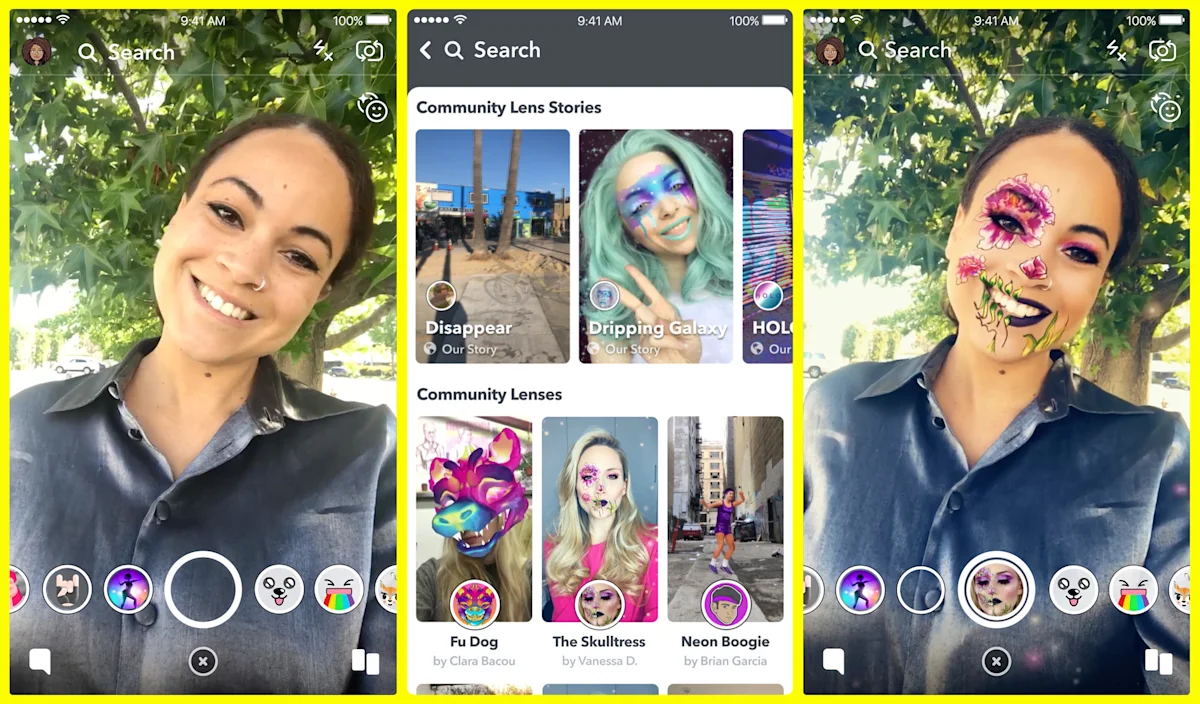
Lens Explorer, Lens Carousel & Lens Challenges
Discovery, ranking, and personalization UX for browsing millions of community-built AR Lenses: Lens Carousel ranking, Lens Explorer, Lens Favorites, Challenges, and AR Bar.
2014
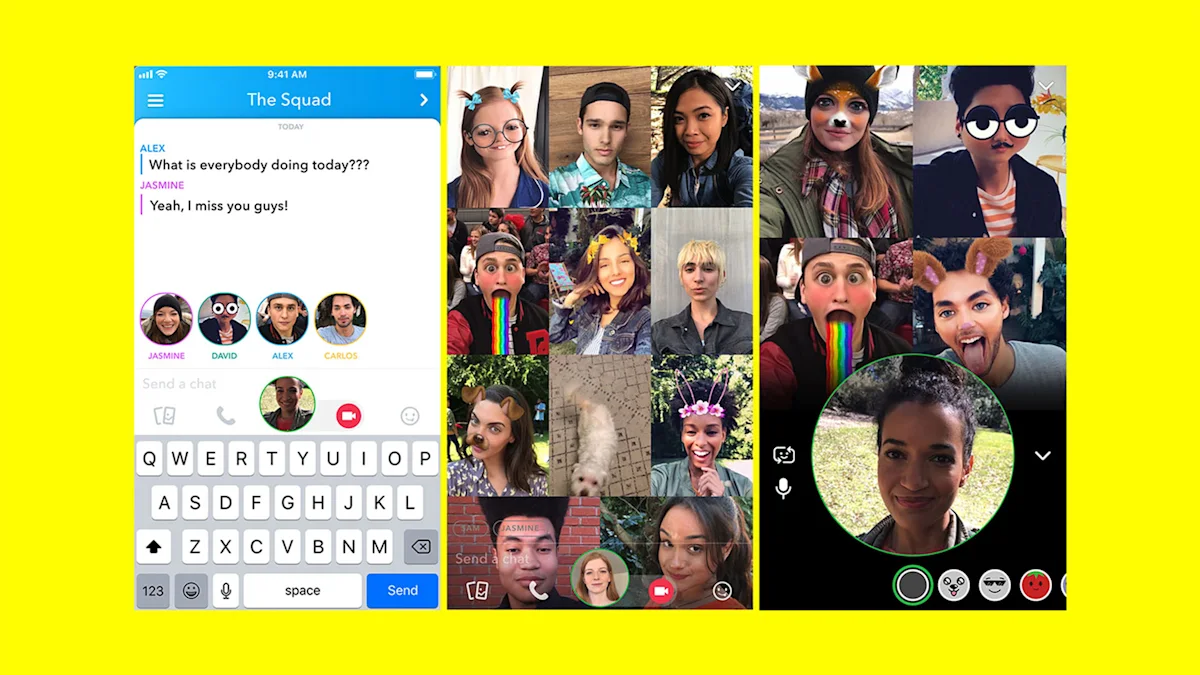
Chat 2.0, Group Video Chat & Messaging UX
Real-time text messaging, live "Here" presence indicators, voice/video calling, 16-person Group Video Chat, Chat Replies, Reactions, Voice Notes, Poll Stickers, and Editable Chats.

2020
Spotlight Short-Form Feed, Remix & Unified Feed
Algorithmic full-screen vertical video recommendation feed, cold-start viral ranking, Remix/Duets, unified content feed display within messaging, and desktop web viewer.
Core Platform & Infrastructure
Low-level networking, video/image codecs, compression, distributed storage, CDN routing, Android rewrite/startup performance, ML serving infra, and generic mobile OS optimizations.
Leonardo Ribas Machado das Neves
Research ScientistLead / StaffResearch Scientist at Snap Inc.
Experience & Features Shipped
Collaborator Network
People who frequently built and filed patents with Leonardo Ribas Machado das Neves. Click anyone in the network to see what they shipped together and which teammates overlap.
View collaborator details as table (16 people)
| Collaborator | Role | Shared Patents | Years | Shared Features |
|---|---|---|---|---|
| Vitor Rocha de Carvalho | Research | 13 | 2018–2026 | — |
| Vítor Silva Sousa | Research | 11 | 2020–2025 | Spotlight Short-Form Feed, Remix & Unified Feed, Ads Manager, Snap Pixel, CAPI, Dynamic Ads & Bidding ML, Camera Viewfinder, Captions, Doodles & Scissors Stickers |
| Luis Carlos Dos Santos Marujo | Research | 8 | 2018–2023 | Chat 2.0, Group Video Chat & Messaging UX |
| Di Lu | Research | 5 | 2018–2026 | — |
| Neil Shah | Research | 5 | 2021–2023 | Spotlight Short-Form Feed, Remix & Unified Feed, Ads Manager, Snap Pixel, CAPI, Dynamic Ads & Bidding ML |
| Ning Xu | Research | 5 | 2019–2023 | Lens Explorer, Lens Carousel & Lens Challenges |
| Ning Zhang | Research | 5 | 2018–2026 | — |
| Seungwhan Moon | Research | 5 | 2018–2023 | — |
| Shubham Vij | Research | 5 | 2020–2025 | Camera Viewfinder, Captions, Doodles & Scissors Stickers |
| Venkata Satya Pradeep Karuturi | Research | 5 | 2018–2023 | Chat 2.0, Group Video Chat & Messaging UX |
| William Brendel | Research | 5 | 2018–2023 | Chat 2.0, Group Video Chat & Messaging UX |
| Nils Murrugarra-Llerena | Research | 4 | 2021–2025 | Spotlight Short-Form Feed, Remix & Unified Feed, Ads Manager, Snap Pixel, CAPI, Dynamic Ads & Bidding ML |
| Jianfei Yu | Research | 3 | 2019–2023 | — |
| Farhan Asif Chowdhury | Software Eng | 2 | 2021 | Ads Manager, Snap Pixel, CAPI, Dynamic Ads & Bidding ML |
| Francesco Barbieri | Research | 2 | 2018–2020 | Chat 2.0, Group Video Chat & Messaging UX |
| Koustuv Saha | Software Eng | 2 | 2021 | Ads Manager, Snap Pixel, CAPI, Dynamic Ads & Bidding ML |
Go Deeper
Activity timeline by year
Activity Over Time
Leonardo Ribas Machado das Neves's active years and patent cadence across public filings.
- 33 patents
Snap Inc.
· ~8 yrs
Patents by Year (2018–2026)
- 5
- 2
- 2
- 9
- 5
- 5
- 2
- 2
- 1
Underlying public patents (33)
- US20260377651A1Core Platform & InfrastructureView Filing
NAMED ENTITY RECOGNITION VISUAL CONTEXT AND CAPTION DATA
The system uses a post's image to help identify names, places, and other named entities in its caption. This improves interpretation of ambiguous text without specifying where that interpretation appears in Snapchat.
MESSAGING SYSTEM FOR ENGAGEMENT ANALYSIS BASED ON LABELS
The system identifies subjects in user images and measures how people engage with content containing those subjects. It adjusts those measurements to identify changing interests and trends.
MESSAGING SYSTEM WITH TREND ANALYSIS OF CONTENT
Finds emerging topics by counting words in user content, captions, and overlays. It then creates related text, images, or AR effects for those trends.
NAMED ENTITY RECOGNITION VISUAL CONTEXT AND CAPTION DATA
The system uses a post's image to help identify names, places, and other named entities in its caption. This improves interpretation of ambiguous text without specifying where that interpretation appears in Snapchat.
MESSAGING SYSTEM WITH TREND ANALYSIS OF CONTENT
Finds emerging topics by counting words in user content, captions, and overlays. It then creates related text, images, or AR effects for those trends.
MESSAGING SYSTEM FOR ENGAGEMENT ANALYSIS BASED ON LABELS
The system identifies subjects in user images and measures how people engage with content containing those subjects. It adjusts those measurements to identify changing interests and trends.
MULTIMODAL SENTIMENT CLASSIFICATION
The model combines a post's text and image to determine the sentiment expressed toward a particular entity. It distinguishes that entity's surrounding context from the rest of the post.
MULTIMODAL NAMED ENTITY RECOGNITION
Uses both a picture and its caption to identify names or other named entities in the caption. An attention mechanism decides which visual, word, and character clues matter most.
MACHINE LEARNED LANGUAGE MODELING AND IDENTIFICATION
The system learns to identify a message's language using word frequencies, character frequencies, and character ratios. This supplies general language-analysis infrastructure for text-processing services.
NAMED ENTITY RECOGNITION VISUAL CONTEXT AND CAPTION DATA
The system uses a post's image to help identify names, places, and other named entities in its caption. This improves interpretation of ambiguous text without specifying where that interpretation appears in Snapchat.
MULTIMODAL SENTIMENT CLASSIFICATION
The model combines a post's text and image to determine the sentiment expressed toward a particular entity. It distinguishes that entity's surrounding context from the rest of the post.
MESSAGING SYSTEM WITH TREND ANALYSIS OF CONTENT
Finds emerging topics by counting words in user content, captions, and overlays. It then creates related text, images, or AR effects for those trends.
MULTIMODAL ENTITY IDENTIFICATION
Combines clues from a post’s image and text to determine which person, place, product, or other entity it refers to. It weights the clues and compares their combined representation with a database of known entities.
JOINT EMBEDDING CONTENT NEURAL NETWORKS
The device updates a compact representation of the user's preferences as they interact. A server finds matching content using that representation without needing the underlying interaction history.
- USAPP-PCTUS2022038830Core Platform & InfrastructureView Filing
EVOLUTION OF TOPICS IN A MESSAGING SYSTEM
Analyzes how often words and phrases appear in message captions to detect emerging or fading topics. Forecasts future phrase frequency to distinguish sustained trends from unusual spikes.
- USAPP-PCTUS2021064553Spotlight Short-Form Feed, Remix & Unified FeedView Filing
ENGAGEMENT ANALYSIS BASED ON LABELS
Apparently uses labels to analyze engagement with content, potentially improving which videos users see. The available metadata does not establish the specific labels or recommendation workflow.
MACHINE LEARNED LANGUAGE MODELING AND IDENTIFICATION
The system learns to identify a message's language using word frequencies, character frequencies, and character ratios. This supplies general language-analysis infrastructure for text-processing services.
- USAPP-PCTUS2021060348Ads Manager, Snap Pixel, CAPI, Dynamic Ads & Bidding MLView Filing
TIMING ADVERTISING TO USER RECEPTIVITY
The filing appears to select when to show an advertisement based on how receptive a user is likely to be. The title does not reveal the signals used or the exact prediction method.
- USAPP-PCTUS2021060031Ads Manager, Snap Pixel, CAPI, Dynamic Ads & Bidding MLView Filing
TIMING ADVERTISING TO USER RECEPTIVITY
The filing appears to select when to show an advertisement based on how receptive a user is likely to be. The title does not reveal the signals used or the exact prediction method.
MULTIMODAL NAMED ENTITY RECOGNITION
Uses both a picture and its caption to identify names or other named entities in the caption. An attention mechanism decides which visual, word, and character clues matter most.
EVOLUTION OF TOPICS IN A MESSAGING SYSTEM
Analyzes how often words and phrases appear in message captions to detect emerging or fading topics. Forecasts future phrase frequency to distinguish sustained trends from unusual spikes.
NAMED ENTITY RECOGNITION VISUAL CONTEXT AND CAPTION DATA
The system uses a post's image to help identify names, places, and other named entities in its caption. This improves interpretation of ambiguous text without specifying where that interpretation appears in Snapchat.
- USAPP-PCTUS2021070398Camera Viewfinder, Captions, Doodles & Scissors StickersView Filing
MESSAGING SYSTEM WITH TREND ANALYSIS OF CONTENT
Finds emerging topics by counting words in user content, captions, and overlays. It then creates related text, images, or AR effects for those trends.
MESSAGING SYSTEM FOR ENGAGEMENT ANALYSIS BASED ON LABELS
The system identifies subjects in user images and measures how people engage with content containing those subjects. It adjusts those measurements to identify changing interests and trends.
MESSAGING SYSTEM WITH TREND ANALYSIS OF CONTENT
Finds emerging topics by counting words in user content, captions, and overlays. It then creates related text, images, or AR effects for those trends.
PICTORIAL SYMBOL PREDICTION
A prediction model suggests pictorial symbols such as emoji. It learns to predict both individual symbols and their broader categories to improve its suggestions.
MULTIMODAL SENTIMENT CLASSIFICATION
The model combines a post's text and image to determine the sentiment expressed toward a particular entity. It distinguishes that entity's surrounding context from the rest of the post.
JOINT EMBEDDING CONTENT NEURAL NETWORKS
The device updates a compact representation of the user's preferences as they interact. A server finds matching content using that representation without needing the underlying interaction history.
NAMED ENTITY RECOGNITION VISUAL CONTEXT AND CAPTION DATA
The system uses a post's image to help identify names, places, and other named entities in its caption. This improves interpretation of ambiguous text without specifying where that interpretation appears in Snapchat.
MULTIMODAL ENTITY IDENTIFICATION
Combines clues from a post’s image and text to determine which person, place, product, or other entity it refers to. It weights the clues and compares their combined representation with a database of known entities.
MULTIMODAL NAMED ENTITY RECOGNITION
Uses both a picture and its caption to identify names or other named entities in the caption. An attention mechanism decides which visual, word, and character clues matter most.
PICTORIAL SYMBOL PREDICTION
A prediction model suggests pictorial symbols such as emoji. It learns to predict both individual symbols and their broader categories to improve its suggestions.
MACHINE LEARNED LANGUAGE MODELING AND IDENTIFICATION
The system learns to identify a message's language using word frequencies, character frequencies, and character ratios. This supplies general language-analysis infrastructure for text-processing services.
Role verification & public sourcesVerified · Snap Research Papers
Leonardo Ribas Machado das Neves's original 2017–2021 inventions developed models that interpret images and text together, identify entities and sentiment, and detect emerging content trends. Separately, verified Snap-affiliated papers from 2024–2026 document later research on user modeling and generative recommendation.
Role signal: Eight verified OpenAlex papers establish applied research activity, reinforced by an 0.85 ML/CV CPC ratio and multimodal neural-model filings. The paper count, 33 filings, and six first-inventor credits support lead/staff seniority; five pillars alone do not establish executive status.
Patent origins span 2017–2021; later patent filings are continuations, while separate papers document Snap-affiliated research in 2024–2026.
Also listed on filings as: Leonardo Ribas Machado das Neves, LEONARDO RIBAS MACHADO DAS NEVES
- Semantic IDs for Recommender Systems at Snapchat: Use Cases, Technical Challenges, and Design ChoicesSource
- Understanding ID-Text Complementarity in Sequential RecommendationSource
- Generative Recommendation with Semantic IDs: A Practitioner's HandbookSource
- Revisiting Self-attention for Cross-domain Sequential RecommendationSource
- Learning Universal User Representations Leveraging Cross-domain User Intent at SnapchatSource
- GraphHash: Graph Clustering Enables Parameter Efficiency in Recommender SystemsSource